Will Durant: “The Economic Elements of Civilization” (1935)

‘It is impossible to be scientific here; for in calling other human beings “savage” or “barbarous” we may be expressing no objective fact, but only our fierce fondness for ourselves, and our timid shyness in the presence of alien ways. Doubtless we underestimate these simple peoples, who have so much to teach us in hospitality and morals; if we list the bases and constituents of civilization we shall find that the naked nations invented or arrived at all but one of them, and left nothing for us to add except embellishments and writing. Perhaps they, too, were once civilized, and desisted from it as a nuisance. We must make sparing use of such terms…in referring to our “contemporaneous ancestry.” Preferably we shall call “primitive” all tribes that make little or no provision for unproductive days, and little or no use of writing. In contrast, the civilized may be defined as literate providers.’

Our Oriental Heritage, introduction to Ch II. (p5)

From Hunting to Tillage

‘”Of what are you thinking?” Peary asked one of his Eskimo guides. “I do not have to think,” was the answer; “I have plenty of meat.” Not to think unless we have to–there is much to be said for this as the summation of wisdom.

‘Nevertheless, there were difficulties in this care-lessness, and those organisms that outgrew it came to possess a serious advantage in the struggle for survival. The dog that buried the bone which even a canne appetite could not manage, the squirrel that gathered nuts for a later feast, the bees that filled the comb with honey, the ants that laid up stores for a rainy day–these were among the first creators of civilization. It was they, or other subtle creatures like them, who taught our ancestors the art of providing for tomorrow out of the surplus of today’ (6).

‘For hunting was not merely a quest for food, it was a war for security and mastery, a war beside which all the wars of recorded history are but a little noise’ (p7).

‘Hunting and fishing were not stages in economic development, they were modes of activity destined to survive into the highest forms of civilized society. Once the center of life, they are still its hidden foundations; behind our literature and philosophy, our ritual and art, stand the stout killers of Packingtown. … In the last analysis civilization is based upon the food supply. The cathedral and the capital, the museum and the concert chamber, the library and the university are the façade; in the rear are the shambles’ (7).

‘Doubtless the custom [of cannibalism] had certain social advantages. It anticipated Dean Swift’s plan for the utilization of superfluous children, and it gave the old an opportunity to die usefully. There is a point of view from which funerals seem an unnecessary extravagance. To Montaigne it appeared more barbarous to torture a man to death under the cover of piety, as was the mode of his time, than to roast and eat him after he was dead. We must respect one another’s delusions’ (11).

The Foundations of Industry

‘…most history is guessing, and the rest is prejudice’ (12).

Will Durant – “The Conditions of Civilization”

Civilization is social order promoting cultural creation.

Some seven years ago I began to see something I’d missed before, a connection in all things. The romantic era poets led me to this place, where all teachers before them had failed. The public school curricula had always encouraged teachers to connect one field of study to another, but the connections were forced and artificial and painfully uninteresting. But we live in an era of separation and speciality, in which even to know everything about a single subject is impossible without drilling down to some minute portion of disconnect, only to be rendered obsolete every eighteen months.

In 1800 this was not so. In 1800 one could expect to become an expert in all things before the age of 20, and realize this expertise by 25. The world was much smaller, and it was this world that had the breadth of knowledge to look beyond whatever finite scope in which we now classify this or that one’s finite existence.

And so, I found myself seeking out a copy of Spengler, deep in the bowels of the library, silent, the particular row I found myself in almost entirely dark, and something drew me toward this ten-or-so volume set on the history of the world. I miss libraries. I pulled the first volume, Our Oriental Heritage, from the shelf, and the first lines drew me in immediately, unlike anything else. And I knew that from that point forward, I would be something I’d never before been, or, rather, something I’d steadfastly avoided being: a student of history.

Civilization is social order promoting cultural creation.

I made it through the first 900 or so pages of volume 1. And then I lost the book. I began volume 2 and made it through about 200 pages. And then I lost that one and found the first one again. This is over a period of seven years. I still haven’t finished the first one.

Well, now that I’m determined to become intelligent again, at least to become as intelligent as I was at age 18, I’ve pulled out my bookmark and have started with page 1. Will Durant is one of my favorite authors ever. He has astounding foresight and a brilliant wisdom that lets him show, every page or so, when he (correctly) believes the reader to think, “those stupid savages” about his subject, that the reader is guilty of the same stupidity, or rather, that the savages are the more intelligent of the two.

What I loved bout that first lines was that they contained the meaning of life. Essentially, the “meaning of life” is to create. And that’s what so excited me to see, that when the moment we stop worrying about survival, we begin finding ourselves with excess time, and in that time we can either seek amusement, as our instincts prefer, much as a dog sleeps or barks all day, so we watch television and gossip, or we can hoard shit, or we can improve ourselves, improve others, improve everything. Creation takes a million forms, and mostly we don’t do it.

So, to begin again, the same page 1 that I first read in the library, the same lines that realigned my trajectory closer to the complete picture of life, the same lines that lit a passion in me that nearly two decades of formal schooling failed to produce:

Civilization is social order promoting cultural creation. Four elements constitute it: economic provision, political organization, moral traditions, and the pursuit of knowledge and the arts. It begins where chaos and insecurity ends. For when fear is overcome, curiosity and constructiveness are free, and man passes by natural impulse towards the understanding and embellishment of life.

A perfect word: immure

Immure: to confine within walls.

I first encountered the word “mur” at the site of Jeanne d’Arc’s death. This is a perfect example of a perfect English word, and I love when they are made like this. A word that says what it means. The beauty is that it takes a word from the French and gives it extra meaning for which we don’t really have a common word, which can then be extended, as in Proust,

[he] found himself immured for life in a caste…

If you want to know what I think is gorgeous. This is. Gorgeous.

Weezer; Henry Miller: Sexus (1950)

Chapter 1:

Every day we slaughter our finest impulses. That is why we get a heartache when we read those lines written by the hand of a master and recognize them as our own, as the tender shoots which we stifled because we lacked the faith to believe in our own powers, our own criterion of truth and beauty. Every man, when he gets quiet, when he becomes desperately honest with himself, is capable of uttering profound truths. We all derive from the same source. There is no mystery about the origin of things. We are all part of creation, all kings, all poets, all musicians; we have only to open up, only to discover what is already there.

There’s a few entries I’ve hidden for this or that reason, so there will be some inconsistencies here and there. I’m beginning to get my habits together again. I had the bookshelves organized by color–but I couldn’t handle it. They needed to return to organization by genre, time period, subject. I can find what I’m looking for again. Michael says I have a bachelor’s fridge now. The two peaches on the countertop are growing soft. I eat them over the sink, I wash them first, and then rip them in half to see what they look like, am careful to chew off and spit out ugly parts. I bought some new soap, some new razors. I bought a new shirt. I ironed my clothes for the week.

Friday night Michael and I got completely trashed at the old hit-or-miss Mint, thanks to that old bartender who seems incapable of making it beyond the first ingredient in any recipe. Sidecar? A glass of brandy. Manhattan? A glass of whiskey. We stumbled home late, I made him up a bed on the floor and we passed out, the thunderstorm knocked out the power a few hours later and I woke up nauseated and unhappy, wondering how in the world I’d manage to be up at 730. But, I sprang out of bed like a puppy, Michael bolted while I showered, and after a quick stop at the drug store for some immodium and ginger ale, Charlie and I were on the road by 830, heading to DC for the concert of the century: Weezer. Free. Sponsored by Microsoft to celebrate the opening of their new store. We listened to Bill Hicks’s Arizona Bay, and all the spoken-word bits of The Who’s Life With The Moons on the way up.

And then the Weezer show. At which Microsoft gave us water and yo-yo’s while we stood in line. Food once we got into the theater. A seat in the fourth row center. Two hours of a DJ and prizes (we didn’t win). And a Weezer concert. I only know their hits…so they played every song I’ve ever heard by them. A great show. I was inspired to become a guitarist.

Boccaccio: Day 1, Stories 1-3.

Mike's Billiards

I think the fondest pre-reading memory of Boccaccio I have is as I stood outside a billiards-room in Amherst, having been reintroduced to Will after some years, and while I’m trying to decide if anyone realizes that I’m only pretending to smoke a cigarette, he’s trying to make a point about Walter Benjamin’s “Mechanical Reproduction” and asked me, “so, if you’re familiar with Boccaccio, you’d, oh, are you familiar with Boccaccio?”
The Decameron, yeah” Apparently he wasn’t expecting me to say that.
“…really?”
“Of course.”
“Why do you know who he is?”
“I dunno, because I studied English and it’s important to know where Chaucer and Shakespeare got their stories from?”

Of course, I was bluffing. I knew just enough to bluff. But he immediately switched the subject to the connection between Boccaccio and Charlie Chaplin, which, if you’ve read this blog before, you’ll know I can bluff just as well when it comes to the great silents…anyway, he was dismayed, I was delighted, and we got a place together and lived happily ever after.

One comes across the plague in various forms, a source of fascination to every generation, a muse in every genre, sometimes lightly as Bergman’s Seventh Seal or Boccaccio, sometimes dark, as in Lucretius’s De Rerum Natura, or Mary Shelley’s Last Man. At its heart, I think, is the extreme focus of the singularity of man, in whose fragility and amidst a divine silence it becomes apparent that there is nobody watching over us, no higher order, no final recompense; there is only life, which is suffering, and death, which is horrid. But it’s precisely that divine silence that allows brilliance to flourish time and again, not that we need a plague to feel forsaken, as I think the atmosphere of post-Enlightenment war straight through the 20th century has produced  rarely more than works of forlorn schizophrenia to the point that we may have replaced Greatness with Feelings forevermore.

Anyway, Boccaccio so transparently wants to write stories of frivolity yet needs to grant himself license to do so somehow, and so the framing begins. Indeed, he reminds of the horrors of the plague and how it led many to…well, licentiousness. Well, forget them, as his characters are religious and well-disciplined young men and women who, with their servants, of course, pack up and take a trip far off into the countryside, about the distance that I’ll go for a slice of pizza when I’m super hungry, and tell stories befitting such religiosity, discipline, etc. etc.

Master Ciappelletto dupeth a holy friar with a false confession and dieth; and having been in his lifetime the worst of men, he is, after his death, reputed a saint and called Saint Ciapelletto.

And this is where the fun begins. It takes quite a long series of introductions to reach this point, but the payoff is fabulous. The most horrible man you’ve ever heard of becomes a saint because he lies about his deeds. That’s it. And the way he goes about it is so very, very funny, and heretical, and one wonders how things like this become classics anyway.

Abraham the Jew, at the instigation of Jehannot de Chevigné, goeth to the court of Rome and seeing the depravity of the clergy, returneth to Paris and there becometh a Christian.

Just to remind you that one religion is the correct religion, or something, but a brief story with none of the character development, the humanity, of the first one. I think it’s written for one reason, which is to provide an excuse going forward, that “it having already been excellent well spoken both of God and of the verity of our faith, it should not be henceforth forbidden us to descend to the doings of mankind and the events that have befallen them.” Voila. Who can argue with logic like that? The Church is responsible for logic like that, and so…

Melchizedek the Jew, with a story of three rings, escapeth a parlous snare set for him by Saladin.

I haven’t anything else to say about this one. Saladin asks him which religion is best, and he answers “to each his own,” and then happily lends Saladin some money for war and the two become BFFs.

In short, it’s the lovely framing of the stories that I find so fascinating, as Boccaccio, under a pious cloak finds a way to tell us dirty little stories.

I wonder if I can fall asleep this time.

Boccaccio & Heloise…From My House to a Nearby Mexican Restaurant

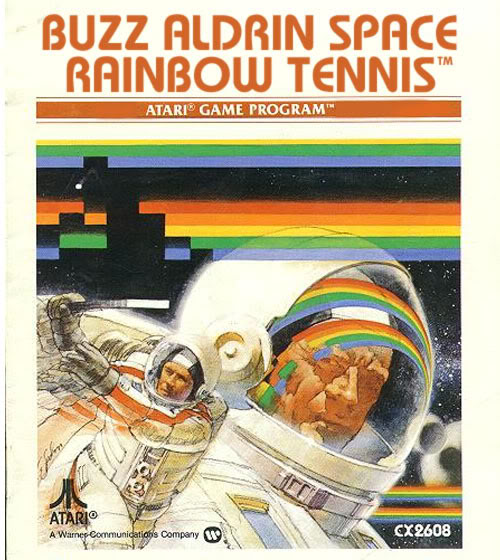
spacetennisIt’s just about 5am. We have new tables. A whole bunch of new tables. We have four tables, and five chairs. That’s such a poor ratio that I’m afraid guests won’t know which are which. Anyway, I’m awake for two reasons. The most likely one is the nausea from my new round of antibiotics. The less likely one is that the steroids are doing it. The doctor was giggling as he prescribed me all this. And I suppose I feel a bit better than I did yesterday morning, at least in my sinus. Charlie asked “what did you do the last time you were sick for six months?”

And that’s when it struck me: “omg. I’m a sickly child.” There’s a pile of clothes by the wall in the living room. It’s the “put in trashcan and burn” clothes, like they do with children who die in London orphanages in the 1800s. I’ll just, you know, give them their own wash, or four, because walk-in clinics are frightening. They’re filled with doorknobs, armrests, and pens.

I don’t want to be sickly. I want to be strong and healthy. Okay, I just sat up straight. That’s a start. Overall, yesterday I felt…empty, confused, as if I had no purpose or anything to do with my life. Maybe it’s because I’m sick. Maybe it’s because I’m dreading this upcoming show at JMU because I’m increasingly tired of having my work-week schedule fouled up. Maybe it’s because Tyrone killed himself a whole month before Halloween.

This is what I remember of Tyrone. I remember he sat in the first column of seats in History class in 6th grade. But when you grow up someplace 99% white, you can’t help but begin by discussing skin color. Almost All the African-Americans I’d met before him lived in a nearby apartment complex where things happened like my friends’ parents being shot in their heads (this happened twice). I learned what it looks like when one’s parents beat you with a belt, the pink welts across bellies. And about being threatened and knocked ove for no reason. I tried to stand up for myself once; definitely not a good idea. Of course, they didn’t show any signs of antisemitism, like the white middle-class kids did! The apartments have since been demolished. But these were my associations, and they didn’t seem strange, I guess. I mean, I don’t remember feeling awkward while eating lunch with Jesse and asking him questions about his father killing his mother over the weekend.

So when Tyrone, slight, dressed like us, and carrying a violin, walked in on day 1 of 6th grade, I didn’t know what to think. He’d sometimes take it out, I guess he was in the row beside me, and we became friends to the point that in 7th grade we were eating lunch together every day and by my 14th birthday he was one of three friends I had spend the night. In our comic-book years his nickname became “BHJ” — that’s “Big Hairy Johnson” — and we’d chant it like we had any idea we knew what we were talking about. He would do things like ask for everyone’s birthdays and phone numbers and tell us that he’s studying the art of memory, that he’ll memorize them and come back in a few months and recite them to us. And then he’d do it.

In recent months I’ve kept thinking of him, that he was the only one in the group who never seemed to betray our friendship. He seemed to be everyone’s friend. And perhaps that should have been the first indication of something wrong–people who are everyone’s friend seem often to be distant or detached somehow. There’s only so far you reach before hitting a wall. What do I know? We were in high school. All my photos of him show him smiling. I’d written him recently in response to some photos I came across of his. He didn’t write back. And then it was last night that I found all the RIP notes on his facebook.

When you’re a child, bad things don’t really happen to other people so much as that kids just sort of come and go, appear and disappear like clouds, one day they show up as a new kid, the next they disappear forever because their parents split and now they’re in Kentucky. I don’t remember asking any questions or even wondering why people disappeared. Bad things happened, but look, we made it through the little years, and now we’re all big people. And so the countdown begins, it’s time for us to all start dying off, I guess. Stuart led the pack with the drunk driving incident. Dixon went on to get stabbed to death during a drug deal. A suicide here, an accident there. Old age must be horrifying. I’ve been dreaming a lot about war lately. I’m always in war with a BB gun, an air gun, forced to use bullets that somehow are useable after someone shoots at me with them.

Abelard was castrated. That happened because of a misunderstanding over what he was doing with Heloise. What exactly was he doing with Heloise? I haven’t figured that out. I thought he was only hiding her in a convent to make it easier to see her.  Why couldn’t they just be a normal married couple? And why did she go along with it for so long? She seems positively modern in her love for him. He shrinks back into the darkness.

When the young people leave town, day 1 of the Decameron, they walk “two short miles”–that’s the distance from my house to the nearby Mexican restaurant. Or the post office. That’s about a half hour walk. And after much deliberation that’s where they go to escape the plague. That opens all sorts of questions about population and political boundaries. I mean, that’s a shorter distance than between the Bennets’ home, Longbourne, and their town, or Bingley’s house, places everybody walks, all the time.

Percept vs Phantasm

Some of the best things are not the new ones, but the old ones repeated well.

“First the external senses…operate on an object present before us and produce a percept. The internal senses, primarily the imagination, produce a phantasm or mental image of the individual object perceived, and this phantasm is retained and can be reproduced at will in the absence of the object.”

Easy. You look at something, form an image of it, and remember it later. Less easy. The thing is real, the external senses lead you to perceive it incompletely and subjectively, the internal senses create a phantasm that’s incomplete and subjective and further colored by missing details, falsely filled-in details, emotions, other events, and similar experiences rendering it somewhat generic.

So, are memories generally incorrect? I can remember my phone number. How subjective can I make my phone number? How incorrect could I possibly get it? I either have it or I don’t. I remember it though. I remember processes and formulas in Excel, and I use them to solve problems. I don’t always remember all their functions. How about a chair? Can I remember a chair? I know a chair needs four legs, a seat, a back, some armrests. I just invented a generic chair in my imagination. I can’t place it anywhere in reality–the chair I just invented has a curved back and round wooden bars and seems fairly uncomfortable. I don’t think I’ve seen it before. Also, I don’t think I can really draw it. I can’t really remember how my favorite chair looks either. Slightly I can, but not entirely. I know where it is, I know how it spins. Also, I have no idea what my chair at work looks like. I’ve been sitting in it for nearly two years now. Alright, so, memories aren’t much good. But, I suppose the important thing is that when I see a chair I know I’m supposed to sit in it rather than try putting it on like a shoe.

poetry: Ginsberg – Howl and other poems (1956)

Some weeks ago Caleb and I spent four hours walking up and down and around the block, past the hospital, in and out of bars as each was either too noisy, or too empty, and eventually to the convenience store where I bought some milk and frosted flakes, and back to my refrigerator, and then back to the streets to walk around the block some more.

I felt conflicted by a recent turn of events in my life: for the first time ever, I’m being paid to compose music. I’m elated, but there’s still that starry-eyed teenager inside me whispering the old shit about refusing to sell out. The whisperings are cute, but I’ve been sick since July, and about once a month I go to a different doctor asking for charity to help fix me up for a few weeks. My cough came back today…and that’s what you don’t think about as a teenager.

Caleb brought up a point I’d forgotten: for all of history (history itself assuming a modicum of civilization and the confidence necessary to record its goings-on) until rather recently, art was created on commission, more or less exclusively. That’s good company. And then he suggested that the first time art was created for its own sake, or rather, as a vessel for its creator, was the romantic era.

Oof! You know how I feel about romanticism.

But it isn’t just that it was being created as vessels for their creators, but it was setting the new norms for art through its popularity. By the end of the romantic era an entire generation had grown up with their works as some of the most accessible reading material, like the Da Vinci Code for us. And here’s why this is relevant to us presently: because the trend increased continually, right up to our Facebook/Youtube lives, in which we’re all stars, constantly producing content (i.e., me, right now) to glorify ourselves.

BUT! there’s this little blip along the way, the GI Bill after WWII, the thing that sent a whole generation of white American men to college. And a great number of them took creative writing classes. And a great number of them began writing literature. And that’s where postmodernism came from, I guess.

People who don’t know much, writing books for people who know even less, to teach them about how they pass their days. Does everyone deserve a liberal arts education? No. And does everyone deserve to be subjected to a liberal arts education? No. But that’s what we spend some 17 years at least doing, going to get a liberal arts education so we can be somehow presentable, and yet still unable to function in any meaningful way to society. You know what I’d have rather done: go to school to become an auto mechanic; there are very few things in my life that I’ve found as fulfilling as fixing my car (which is super, since I drove into some guy’s gigantic tire when I was trying to parallel park, and tore half my bumper off). Whenever my brother offers to employ me at his highway-paving business I decline the offer because…you know…my delicate fingers.

To the point: I find Kerouac and Ferlinghetti unreadable, Burroughs oversold, and Ginsberg of sometime comic value. And that’s about all I can say about that.

Why this book was thrust into my hands when I was just 18 or 19, in college, as part of an American Diversity class I needed for my major, only god knows–but that’s what college is–teaching children about the world through books while simultaneously putting them in so much debt as to ensure they can never experience the world for themselves.

It’s better than plenty of things, of course. It’s better than all the things that lead to great art, for instance.

In the meantime I’d been wondering if I’d already reached my peak, if I was already on my way downhill and just nobody had told me. If I had to pinpoint my peak, it occurred somewhere during 2009. That’s a nice time to begin going downhill. And suddenly my music is on national television?!?!? This is definitely my peak, well, sometime yesterday, like, right before I cooked a lunch that made me kinda sick, that was my peak, when I found out about it. But, since time is pretty big place, that’s relatively recent, and so I hit my peak yesterday! I sure hope it’s not all downhill. I’m not ready for that yet.

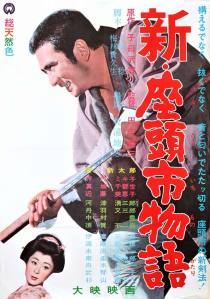
Tanaka: New Tale of Zatoichi (1963)

The radiators are screaming like lobsters boiling alive, outside the sounds of things coming and going, wind whistling in the tree, sirens, planes zipping around, in short, a frighteningly noisy night. A week ago the place was a cornucopia of delights, breads, fruits, juices, yogurts, everything a boy could want. But now, it’s back to Frosted Flakes for dinner, there might be a spare apple, it might be soft on the bottom.

I had a little party last night. Not a Halloween party, just a party. We drank Abbey Cocktails and took turns sitting on our three chairs. I have four mugs, but they were too hot to drink from, so there was drinking from measuring cups instead. It reminds me that for ten years I’ve been hanging out with Charlie, we do the same things as when we were young.

I’m still overwhelmed, but I’m beginning to get back to swimming with the current rather than against it.

When they switched to color, they also switched to a director who seemed particular fit for filming in color. The lengthy shots of forest landscapes are magical even forty years later, and that’s a lovely thing, mastering color the instant it becomes available, a sort of timeless mastery that only can be called ‘classic’ since it stands up to whatever high-def version of beauty is available now. And in that beauty one senses the blindness of Zatoichi all the more, as he becomes part of the landscapes, hobbling slowly and silently across the screen, stopping to sniff and swallow in that horrid way we’re all ashamed of needing to wash our hands about, he makes us feel awkward because there’s something wrong with him. But there we are, seeing a beautiful landscape in these long, slow camera movements, superior to poor Zatoichi, who despite not being able to see, can sense the landscapes much more acutely than we can see them. His story continues as he kills off more people he loves, and a bunch of others, we deal with the necessary moral ambiguity, the girl who loves him, and the end.

Mori: The Tale of Zatoichi Continues (1962)

Everything compounds until I’m ripe for madness. The iron will not heat when I plug it in, no matter how many combinations of switches I try, not even when I unplug it and place it on the radiator. I’ve used it once. And that’s the way with us here, we use things once and then they commit suicide. The dishwasher worked once, and then began emptying its bowels on the kitchen floor. The hookah worked once, and then its copper pipe split in two, and if one wants to know why stereotypes persist, go speak with the salespeople at Tobacco Club & Gifts Inc on Cary St (Carytown), Richmond, Virginia. Here’s a conversation that we have once a week, every week, for three months now:

“You come back tomorrow and man who can help you here, but what can I do today? I am the only one here, and if I go through that door and get you what you ask for then nobody out front, so I cannot do that.”
“But…what about the other three guys working right now?”
“Yes, they can’t help you either. I want you to be happy, I would give you the piece you need, but I just can’t go back there. I’m new. I just started. What can I do? You see, perhaps you fix it yourself with a little bit of wire.”
“But we spent over a hundred dollars on this thing and we don’t want it to look like crap, you can understand that right?”
“Of course, of course, but what can I do? I am new, you need to speak to someone else.”
“One of those guys?”
“No, you need to speak with the other man, he come in tomorrow.”
“With the mustache.”
“Yes.”
“I already spoke to him, he told me the person who needs to help me is in another country.”
“What do I know, I am new.”

But ironing. When I die and they compute how I spent the majority of my time on earth, ironing is going to be second to sleeping. And I have an iron that will not iron. It also turns out that $50 can’t buy you an ironing board that stands up on its own. All life becomes a test over how you spend those eight precious hours you have to yourself each day. Within them you must eat three to five meals. You also must shop for the food. And prepare it, cook it. And then clean the dishes and the kitchen afterward. You must commute to and from work. You must buy the gasoline and rotate the tires. You must put on your clothes, and take them off, and wash them, and iron them. You must wonder what that dull aching pulse in the back of your skull is and judge whether or not it has anything to do with your dizziness. You must find the perfect balance of coffee and alcohol to both stay awake and happy just until bedtime. You must wake up two hours after falling asleep to take an assortment of acid-reduction pills. You must burn your leg on the radiator while trying to open the window. You must go back to your parents house every time you need to do something that doesn’t involve a broken modern convenience. To press a shirt. To toast a slice of bread. To seal an envelope. Even the water here doesn’t work right. Not the plumbing. The water. The only way you can get the trash collector to take the trash is if you leave it outside the trash can. The doors are set in their ways. And my head is rebelling. I’m even dizzy in my dreams.

So if one thing is certain, it’s that things compound. If one thing doesn’t work, it has to snowball. It can’t just be too warm in the house, you also need to have diarrhea and a plastic bag wrapped around your head.

And that’s why I identify with Zatoichi today. In the first Zatoichi, all he’s trying to do is find a place to hang out, eat, sleep, for a night, but by and by he ends up having to kill a whole bunch of people, which leads their relatives to seek revenge, and what for a moment was just a request for a bowl of soup turns into needing to kill fifty or sixty swordsmen. None of the moral ambiguity of the first episode. It’s always okay to kill people who are trying to kill you. In Virginia, though, you have to be fancy about it. Let’s say you carry a gun, and somebody tries to kill you, you’re allowed to kill him in self-defense, but only accidentally. If you do the whole “two shots to the chest, one to the head” thing, then you’re the one who gets in trouble. My favorite scenes in Japanese movies are when everyone who’s been killed by the hero is still in the process of dying, rolling around on the floor groaning as the hero walks away. That’s my whole life, rolling around on the floor and groaning as the heroes walk away. The heroes today? The iron. The wrinkled shirts. My equilibrium.