film: Edwards – Victor/Victoria (1982)

victorI generally don’t like movies whose central theme is sexuality; they always somehow fall short. My parents wouldn’t let me see Rocky Horror when I was young, but when they went out of town I watched it and had the same reaction I do now: sleepiness. Perhaps I’ll just never understand what it is to have repressed something for so long and then finally have an outlet for which to expose and celebrate that hidden facet in the extreme…but that sounds suspiciously close to how it is when I go to dance parties…it’s all I want to do, it’s highly encouraged, and I just can’t do it. I think it’s an immature film and seems to me it, if anything, discusses the overconfident pursuit of a thing that makes one uncomfortable, for god knows what reason, although that’s the theme of most college parties.

Hedwig and the Angry Inch does a better job, in my opinion, because it leaves open more questions, which makes it more real. Is Hedwig gay? Well, we’re not sure. But he’s neither a man nor a woman, and although forced into the role of a woman by surgery, it’s ultimately his choice once his husband runs off. But there’s something profoundly unsexual about him also, besides the fact that he doesn’t have any genitals. A man who wants to be a woman, but is neither, who thus forces us to begin wondering what the hell we are anyway, because he’s also in love, and he discusses Plato’s myth of men and women once being single creatures bound together.

So, then we have Victor/Victoria, which treats the subject with humor and music, just as the other two films do, but despite being sillier to the point that it plays with completely Hollywood conventions, it’s also deals with the subject in perhaps the most mature fashion, and perhaps it’s also the most insightful. There are three or four absurdly slapstick restaurant/barroom fights, pianos always get destroyed, everyone always gets involved, wigs fall off, bottles get smashed, there’s never any real danger of anyone dying: that’s the sort of film this is. But it’s also a film about a heterosexual woman pretending to be a gay man pretending to be a woman. And when she falls in love with a straight man, King Marchand, he has to pretend to be gay. He’s the picture of manliness, she’s always Julie Andrews, and we all know it, we have to just pretend that everyone in the film believes her to be a man. We have aptly named Norma, the Marilyn Monroe knockoff who comprises every stereotype, the fake blond hair, the New York accent and boo-boo-pie-doo dancing and fake orgasms and cruelty in revenge from biting half the chocolates to maybe getting her ex, King Marchand, shot. There’s Toddy, who performs the stereotypical middle-aged homosexual very well, his ex, who is only gay in private, and otherwise very classy and snotty, and Mr. Bernstein, who has been in the closet until midway through the film, when we find that when he suddenly turns gay…well, nothing changes except that he has a boyfriend. It may be that the film is more concerned with discussing confidence than sexuality after all.

King Marchand is extremely confident in his heterosexuality, to the point that when he’s attracted to another man, he’s convinced the man is actually a woman when nobody else believes it. He’s correct. And perhaps my favorite lines in the film occur when they finally kiss:

“I don’t care if you are a man.”
(they kiss)
“I’m not a man.”
“I still don’t care.”
(they kiss)

The thing he cannot deal with is pretending to be gay. Yes, he has a problem with people believing him to be gay, but this is where things become confusing, because he tries to make the relationship work, he pretends to be gay. In the only review I could find of the film (Ed Sikov. Film Quarterly, Vol. 36, No. 1) the author suggests that after leaving the gay dance hall and sending Victoria home, he goes to a working-class bar to instigate a fight, the most un-gay thing he can think of doing. But that’s not how I saw it. He goes to the bar and orders milk and then picks a fight when he’s made fun of. But this is why I disagree: he goes in and orders milk in order to be as unmanly as possible, which is also stereotypically considered gay. So in what the critic sees as a blatant rejection of feigned homosexuality, I see as an attempt to wholeheartedly embrace the lifestyle, which includes getting the shit pummeled out of you in a bar, and somehow ends with everybody in the bar drunkenly singing ‘Sweet Adeline’ as friends. This, in my opinion, is a reaffirmation of what Mr. Bernstein proves to us: that it’s possible to be both ‘normal’ and gay. And it’s only afterwards that King Marchand is confronted by the mob for being gay, and withstands their pressure nonchalantly. I think it’s also noteworthy that the only person who makes any sort of groan of ecstasy is King Marchand.

On the other hand we have Norma, who might be considered the female version of King Marchand. The difference is that her confidence in her sexuality is precisely what holds her back and forces her into the most pathetic stereotypes of women, completely in the hands of men, but relishing the influence she has over them because of her sexual charms. In all this, it’s Victoria who is the hero/heroine, because she’s confident enough in her sexuality that sexuality isn’t even a concern when confronted with a proposition to pretend to be a man forever. She does whatever seems like a good idea, and when it no longer seems like the best idea, she stops doing it. She is the only character for whom there are no rules from outside herself, stereotypes mean nothing to her, and it’s her personal strengths that always carry the day.

Finally, I think it worth noting something Julie Andrews’ characters do in both this film and Mary Poppins: upon hitting the last triumphal note of a song, her face beaming with confidence and a reserved joy, she immediately follows it up with an expression of such emptiness and depression that it’s a bit horrifying. Why does she do this? It never seems to fit the character. It may be that it’s the world of music that’s most real to her as these characters, the world of perfection and beauty, and that the moment the song ends, the other reality must return, and she’s no longer who and where she wants to be. In this film, perhaps we get a closer glimpse of this when we see her in hysterics at the opera.


essay: Huxley – The Doors of Perception (1954)

This is one I’ve been putting off reading for years, ever since I reached the conclusion that I’m not really so much a fan of the Doors, maybe one or two albums are alright, but generally, I don’t care. And that book touted as scholarly but sold in every Barnes and Noble discussing Jim Morrison as compared to Rimbaud, I think it’s just a way to stir up some controversy, and make some money by cashing in on the significantly large population of young people who fancy themselves intellectuals because they listen to the Doors and really, really get it. The problem I’d had was that I kept running into these idiots who were convinced that after reading Huxley’s Doors of Perception, they had firmly digested the oeuvre of Blake also, maybe they’d read one of Blake’s early works and contented themselves that this was representative of the whole. And worse yet, the only thing they were able to squeeze out of Huxley was that, well, there’s a smart argument for using drugs, and if you don’t get it, just read this fucking book, okay? He’ll explain it. And essentially, by using drugs, you don’t even need the Doors, or Huxley, or Blake, because you’ve reached the world of the sensual already, through the most powerful medium of all, man, your…I don’t know, eyeballs or something.

I don’t suppose I should have been surprised that this is more like William James showing up to one his lectures a bit in love, and the most fascinating bits are that there was a time when someone took drugs and didn’t just play video games, stand around in 7-11, or hang out with their equally fucked up friends. Instead, he contemplates flowers, and then art, and then classical music. Thankfully he doesn’t do any of this for much more than a few pages, and the rest of the essay is historical, scientific, and when religious or philosophical, hardly different than what Emerson said a hundred years prior at Harvard’s commencement, hardly different than what the wise have known since the beginning of time.

Am I bitter? Yes. Because Huxley notes multiple times that mescaline (see the liner notes in James Taylor’s One Man Dog, in which his song whose only lyrics are ‘mescalito has opened up my mind’ includes a comment that the musicians don’t really agree) offers no negative effects, it brings all users to heaven…except those who have an anxious or depressed disposition, and instead, they will be in absolute hell.

In conclusion: Huxley will always hold a place in my heart since when I was 18 I read Island and, further, believed in it and its condemnation of male orgasm. But I cannot forget his godawful Crome Yellow origins that are perhaps only comparable to Jane Austen as a comedy of manners (no wonder that he was a screenwriter for the 1940 film Pride and Prejudice). I wonder if Huxley is entirely irrelevant? In short, I don’t care, and I’m not going to read the accompanying essay ‘Heaven and Hell’ because I can die contentedly without it.

novel: Duras – Yann Andréa Steiner (1992)

I’ve restarted my list of personal goals that I’m forced to check every day. I did this a couple years ago but didn’t keep up with it. According to the list now, I have to read. So, I’ve begun with Yann Andréa Steiner, an odd intruduction to Duras, a book that’s very difficult to find in either French or English, but since I leant Jordan my copy of the Lover more than a year ago and doubt I’ll ever see it again, I figured I might as well go with this one, especially since it was sitting on my bed when I got home. I provide all this as a preface because I have very little to say about it–it’s beautiful, it refreshes my belief in love. And how does it do so?

It’s considered, though not by her definition of herself, antiliterature. But it functions in a way that is very close to my heart, because it functions in the ways that I think, in the ways that I communicate, the ways that I create: it’s impossible to nail down the objective truth, or even who the characters are from one page to the next, one’s never quite certain if the narrator is speaking of herself, her past, her imagination, or real people she is watching, made even more difficult because we know the narrator to be Duras herself. It focuses on at least two couples: the first is Duras, as an old woman, and her companion, a gay man who hunts her down and lives with her. The second is an 18-year-old girl and a six-year-old boy, who are sometimes in the present, and sometimes Holocaust survivors. There are plenty of other stories in between, but these are the ones the stick out, and the only one I care about is the one of the boy and the girl.

The child and she, the counselor. They are walking together. They are thin, skinny; they have the same body, the same long, lazy walks. This morning they are walking along the seashore. The same, both of them. Two Negroes, very thin and white. Fallen from the sky.

Concern about them seems to be spreading among the other counselors and the administrators. Because they never leave each other’s side.

Beneath the streetlamp she stopped, took the child’s face in her hands, and raised it toward the light to see his eyes: Gray, she said. Then she let go of his face and spoke to him.

She tells him that all his life he will remember this summer of 1980, the summer when he was six. She tells him to look at everything. Including the stars. And also the long line of oil tankers from Cap d’Antifer. Everything. She tells him to look carefully, this evening. The sea, this city, the cities across the river, the spinning lighthouses, look carefully, and at every kind of ship on the sea, the black oil tankers, so beautiful. And the large English ferries, the white boats…And all the fishing boats — Look over there, at all those lights — and she tells him to listen well to all the night’s sounds. That this is the summer when he is six. That that number will never come back again in his life. And to remember Rue de Londres — which only they know, she and he — which is the Temple of the Sun. She tells him that when he’s sixteen, on the same day as today, he can come here; that she will be here in this same spot on the beach but at a later hour, near midnight. He says that he doesn’t really understand what she’s saying but that he’ll come.

She says she’ll recognize him, that he is to wait for her opposite Rue de Londres. That he can’t miss it.

She says, We’ll make love together, you and I.
He says yes. He says he doesn’t understand.
She says, The seashore will be deserted. It will already be night and the beaches will be empty, everyone will be with their families.

They walk together toward the sea until they disappear in the sand, until the people following them with their eyes are horrified.

Until they return toward the tennis courts.

She is carrying him on her shoulders. She sings that by the clearwater stream she rested and never never shall she forget him.

They walk for a long time. It’s already late and the beaches are deserted.

There’s an innocence to their love that makes sense to me, because I don’t know if love can be real without both people allowing themselves to become children at times, so that at times he is taking care of her, because she looks into his eyes and sees how grey and old they are, and she is the child, and at other times he is tired and she carries him, or she washes his body off. In one scene he holds her breasts as they lie on the beach together, and finally she takes his hands off them, perhaps because everyone can see, but…this is the one episode that makes me uncomfortable, not that he held them, but that she took his hands off them. My only explanation is that she knows he doesn’t understand the concept of  making love, that when she expresses her desire for him he doesn’t understand, so that when he touches her this way it’s reaching beyond things he understands, and perhaps places her as his lost mother, which she is not, she is his lover. And if she can only be his lover by doing things he understands, then that is where they maintain their love. Okay, I’m comfortable now. I used to think love should be dirty and angular, but I don’t believe that anymore, because I’ve experienced love fluid and natural, like Blake’s Beulah, a higher innocence, and I am reminded of this, two people taking turns dominating each other with age and wisdom, pulling each other to the brink of fear, and then turning around and reassuring, never pushing each other too far, and finally being very brave together, and running away, kidnapping each other because they can never be apart again. It’s clean, it’s sweet, it’s a description of making love that, as in the novel’s construction, deconstructs the elements and shows on how many levels a thing can exist, and how physical something can be within the confines of experience.

At that moment, it happens; she joins him and I see it. She takes him on her shoulders and they walk into the sea as if to die together. But no. The child lets himself be taken by her into the ocean water. He’s still a little afraid, with a fear that makes him laugh, a lot.

They emerge from the sea. She’s the one who rubs down his body. And then she leaves him. And then she goes back into the sea. He watches her. She goes a long way; at low tide you have to walk far out to reach the deep water. He is still prey to fear when she escapes into the sea, but he says nothing. She stretches out on the waves and heads away. She barely turns around to blow him a kiss. And then he can’t see her anymore; she goes toward the wide open sea, head lowered in the ocean. He is still watching her. round her the sea has been forgotten by the wind. She is abandoned by her own strength; she has the grace of a deep sleeper.

The child is sitting.
Still he watches her.
The girl returns. She always comes back, this girl. She has always come back. Then she asks him if he remembers her name, which she wrote on the postcard. He says a first and last name. She says that’s right, that’s her name.

The counselor has drifted off to sleep.

The child stares insistently at the beach; he can hardly understand how this beach happens to be here without him ever having seen it. Then finally he no longer tries to understand, he pulls nearer the counselor. She is asleep. He gently slips his hand beneath hers so she won’t forget him. Her hand hasn’t moved. Right afterward, the child, too, falls asleep.

Bayeux

Bayeux was a tragedy from the start. Every day for a week I would wake up early in the morning, trudge down to Gare St Lazare, sitting at the front of the metro with all the old women, and ask where the train to Bayeux is, nobody ever understanding my pronunciation. And each day the train would not get there in time for me to get inside the museum to see the famed tapestry. I would use these days to go shopping and visit all the little things in Paris I otherwise would not have seen, perhaps, although I didn’t want to leave Paris at all. Ligne 14 seems to be the furthest underground, it takes four escalators to reach, I think, and as it approaches its final stop at Olympiades, everyone who’s familiar walks to the front car of the train and then runs out to be first up the escalator. The last of the escalators is very long, and at the top are old women handing out newspapers, they may be communists, I’m not sure, I never took one, and in the evenings a large tent is set up and candy is sold, life-size candy bananas and all the colors and shapes and smells to make me feel like a child. I never bought any, on Celine’s advice, because she says it’s all filthy from chemicals floating around in the streets, and I suspect children touch it all. But when Celine took me to a Christmas market I did buy a macaron flavored with bergamot, how many chances does one have to taste bergamot outside a teacup? And also I bought a dried banana and a dried kiwi. I was in heaven, and it was while I was enthralled by my purchases that Celine and her mother sneakily found out what sort of scarf I was hoping to find, I pointed to a bunch of men, anything with stripes, I want to be French! And they bought it for me for Christmas!
Finally, I left early enough in the morning to make it to Bayeux, and its train station is not inside the town itself, but rather far outside it. I was on a schedule, and I heard the sound of English, so I broke my rules to ask a man if he spoke English, and he was stereotypically Irish. ‘Do you know how to get to the tapestry?’
‘Don’t bother, mate, it’s closed.’
‘What do you mean it’s closed? Are you sure?’
‘Trust me. It’s closed until tomorrow.’
‘Is there…anything else to do here?’
‘There’s a pub across the way.’
I had 20 minutes to eat and then catch the next train to Paris. I left the train station and went to the hotel, a grimy place decorated with American and Canadian and British flags and signs saying ‘we welcome our liberators!’ They didn’t have any food at the bar, so I figured I’d walk to the town and see if maybe this Irish guy was wrong, I mean, it’s Bayeux, it has no reason to exist anymore except the tapestry, there’s nothing else in it, how could they close the tapestry? But they had. Some unimpressive doors held a small paper sign with a messy handwritten note that they’ve decided to close for a few days. I walked into the town, up and down the streets, all their shops marked ‘SOLDES!’ just like in Paris, but already the Paris mindset had poisoned me, nothing was chic enough. They’ve tried to give some history to the city by marking every old building and explaining its construction, how the upper floors extend over the lower floors, for instance, to help prevent rain from getting on the ground floor. The oldest building in town still has a fleur-de-lis carved in it, though you cannot see it, it’s so faded, the building boarded up and for sale, an inn that royalty may have stayed once, maybe, or nobody really knows what the hell happened there, but it’s old, the other buildings have computer classes inside, they look modern and lack character. Water flows through the city, stone restaurants, water-wheels, tunnels and iron grates. I couldn’t find a bank anywhere–somebody directed me inside a smelly food store where I found an ATM, and went up and down the streets determined, now that I’d missed my train and would have to spend the whole afternoon here, to find some food to make me happy.
I wanted a mozzerella sandwich, fuck French food, and I found a tiny place that served them, I knew I’d made a mistake as soon as I walked in the door, but the fat woman who owned the place had already seen me, and I felt like it would break her heart if I left. She had an enourmous menu and almost no food, a few pastries scattered in a glass case, a few sandwiches in the window. I ordered a mozerella sandwich, and a small plastic baggie she’d made up herself of haribo candies. Food prices were about half of what they were in Paris, and I was delighted although a bit nervous–it didn’t seem right, are they okay to eat? It wasn’t mozzerella, it was chevre, which even by this point was beginning to make me gag a little, and I threw it away, this goddam skimpy sandwich, I won’t miss the tapestry and reward myself with a shitty sandwich, and went to a larger bakery and bought one of those, I wish I remembered its name, a common French sandwich that they have two types, one for men and one for women, and it’s a piece of bread with some meat on top of it and some melted cheese, very messy and greasy and not especially enjoyable, but…well, it was enough, and I had my candy, and then, when I’d exhausted the town and its narrow sidewalks covered in old people and hipster teenagers,
I went to a bakerie filled with mirrors, one of these places in which there’s barely enough room to walk, so they put in two doors so you can just be forced through like goats, but I loved that it was filled with mirrors so that I couldn’t figure out where it began or ended, I bought a bag of madeleines and something that looked like a baguette but the woman told me was sweet. Sweet is a meaningless term in France because sweet may mean something that is only sweet in your imagination it’s so subtle, like eating a piece of bread while looking at a sugarcube, or something so sweet that your blood congeals before your tongue even knows what’s going on. I prefer the subtle sweetnesses, they remind me of the taste of love. I was running out of money, I continued back to the train station, stopped at the hotel and spent two hours working on translations and drinking chocolates and coffees because they were so unbelievably cheap, some obnoxious old men came in and sat behind me talking loudly to everyone, they seemed to know the bartender, and an old black man came in and sat and watched everyone with a silly grin on his face that one would never see in America, he kept adding comments here and there and everyone treated him very well, and a young woman, perhaps my age, but with eyes that said she had two or three kids, and a short and fetid old woman who shuffled around chewing on her lips, and when I asked where the toilets were and if I had to pay, I went to them and she followed me in, and I closed the door, turned on the dim orange light and stared out the window, and didn’t even undo my belt, just stood there, knowing this horrible smelly woman was on the other side of the door waiting for me, staring, and I finally opened the door, and there she was, staring at the me as I knew she would be, and I stalked out, still having to piss. I had had a brilliant idea, to take the chocolate they gave me and put it in my coffee and it would turn into a chocolate coffee. It didn’t work, once I’d finished the coffee it looked like someone shat in my cup. I tried to eat the horrible stuff to save me from shame, brought my dishes to the bar, paid my obscenely small bill…
and then I caught my train, after taking my pills I fell asleep and a man woke me up fifteen minutes later to let me know we had to change trains. So I followed him out, and he led me to the parking lot where he got in a car and drove away, so I went back underground and found my way to the station, figured out what train I would need to Paris, and spent a while in convenience store looking at erotic novels and debating what the conditions would be for me to have to buy one–I think I promised myself that if I could find a magazine about weight-loss I would buy some erotica. I couldn’t find the magazine, so I just left when my train arrived. I probably ended the evening by picking up a pizza and sharing it with Nathalie, we would drink tea and listen to Keren Ann, and she told me how wonderful it is that I take trains to nowhere and see nothing, because it gives me something to write about. And then I don’t write about it until today, when she knows I’m miserable, she calls and reminds me of these things that we could sit around and laugh at and our wonderful evenings, and she tells me to write about this.

‘You have your music, and your writing, and I have my photography. You need to write, you need to write, and do it now, because you need to use this powerful energy for something or you will lose it for nothing. You are part of a chain.’
‘I don’t like being this part of the chain.’
‘But it’s what you are. Other people depend on you, because when they hurt, maybe it will be something you wrote that will make them feel better.’
‘I don’t care about how other people feel. I don’t care for them, I only care about me and how I feel.’
‘But just think, so many people will suffer like you, so  many people will be hurting, and most of them do not know how to create music or write beautiful things or take photographs, they just have to suffer in silence, and when they are through suffering, they have nothing to show for it. ‘
‘Then I want you to write me about things we did together.’
‘I don’t understand. Like what?’
‘Oh, I don’t know, like ending up in the Luxembourg garden and the cafe being closed and sitting in those green chairs in the cold eating our desserts for breakfast, or that bitch with the hot chocolate–we had a lot of hot chocolate episodes, or going out on New Years and being unable to find a bar!’
‘Or going out on my birthday and walking for hours trying to find a bar and finally you got annoyed and demanded that I choose any bar!’
‘I didn’t get annoyed, but they were all going to close soon and we Had to get a drink.’
‘And afterwards we spent a whole hour in the fucking cold trying to find a cab!’
‘I need you to write all these stories, all the stories you can think of.’
‘Yes, I will, and I will send you the recipe for flan and you will impress your parents with your cooking.’

Dijon pt 4: my theories concerning possessive contractions, marriage, feminism, racism, the relevance of hexameter, sex and music, and why jazz could have only come from America.

chouetteI think when I first began speaking French with C, I was trying to suppress how silly I felt by being a bit dramatic about it all, so that when I’d say oui (mostly they don’t say oui, but instead say what I think is spelled ouais) I’d shake one finger in the air and say “ah, oui!” while nodding with an expression of knowing a secret. And because she and S found this funny they would do it too, or repeat it after me, to the point that it’s now habit for me, and I’ve been told a few times that people like when I do it and appreciate it. ‘Appreciate’ may be a word that’s confused in translation. But it’s sometimes difficult to remember that while I take a word and translate it into English before comprehending it (generally—although I’ve been finding that I speak many words without translating now), they do not. This is their language, it’s what their thoughts comprise, it’s their feelings and their dreams, it’s how they cry out in pain and pleasure, and I think that’s something one should not forget or mistake the value of, that ‘oui’ to them is not ‘yes’ to us, it’s not the same word in a different language, it’s a different word with a similar meaning.

And I don’t know if I mean all words are like this, but I think it may be significant that ‘Stephen’s chair’ (which may once have been ‘Stephen his chair’—and if French is any indication of how different rules of grammar may be [from what I can figure, in French the gender of the object determines the gender of the article or pronoun used before it, so that ‘this is Jane and this is her father’ would be translated to French and then literally to English is ‘this is Jane and this is his father.’] it’s been argued that using << ‘s >> to show possession could not have resulted from a contraction with the word ‘his’ because why do we say ‘Jane’s book’ and not ‘Jane’r book’? Perhaps I’d be correct in guessing that in English, where we still, despite the small battles being won by feminists on this front, persist in assuming anything whose gender is unknown is masculine [for instance, when using ‘one’ as the subject, unless otherwise obvious, the correct pronouns to use are all masculine] at one point assumed, grammatically, that the gender of any and all objects, regardless of whether it has an additional gender in reality, was masculine.

Feminists say ‘ah, look at this patriarchal society, men get paid more and don’t have stereotypes against them and even the word ‘woman’ has the word ‘man’ in it, as if we’re a modified man’ and then begin making all sorts of alterations to language, such as changing fireman and firewoman into firepersons while deciding that ‘actress’ and ‘Jewess’ should be done away with entirely in favor of their masculine counterparts. Sometimes they even spell women with letters to eliminate the ‘man’ portion, thus women becomes wimyn or something to that effect. Yet, these feminists still use the masculine contractions—I won’t be convinced of anyone’s convictions, no matter how many balls are crushed along the way, until every object in the English language is given a gender and contractions are dealt out accordingly. There you go, feminists, if you want to show someone you’re serious and want to do it without merely adopting the most repugnant habits of the worst sorts of men, go reinvent the fucking dictionary. And to everyone convinced that marriage is something between a man and a woman, I suggest you go research the origins of the terms ‘man’ and ‘woman,’ and conclude by retracting women’s right to vote, okay, okay, I mean retracting all women’s natural and basic rights, returning them to the status of property, because from what I can tell, if you’re playing by the dictionary, then you’re dealing with terms and concepts from dead languages and societies that understood magic better than you understand how to spell your own name.

Let me spell this out as I understand it: Man meant man. Wife meant woman. Husband meant a married man in relation to his wife, that is, his woman, coming from the words ‘house’ and ‘bóndi’ (‘occupier and tiller of soil’ according to the OED—and on its suggestions I’m also guessing that the word ‘bind’ probably originates in the proto-indo-european language) and unless I’m terribly mistaken I think it’s therefore obvious that the word husband is a word produced by an agrarian society, that without the creation of the concept of property, there is no marriage, and marriage is not so much the binding of two things together as the binding of one beneath another. So, there you go, fuck off, conservatives! Say what you mean, and don’t try to qualify it with casuistries you heard from O’Reilly; you can all go to hell with the liberals! No, actually, you can all go to hell, just leave me the chefs and the prostitutes. And to show how little you mean to me, I’m not even going to close whatever parentheses and brackets I may or may not have left open, because you’re not even worth my going back to figure it out! As I once heard, if you were on fire, you would not be worth my piss.

Oh, and by the way, jazz and its emphasis on the 2nd and 4th beats is, it seems to me, is a reflection of the iambs that are what make up our English speech patterns. Translations of ancient Greek epic poetry are difficult because we don’t have a language that adapts to its patterns of dactyls. If they’d taught us that in school we’d have less trouble understanding why we have to learn these fucking terms in the first place. Who cares where the stress is? Why does it matter? The music of Hildegard von Bingen I’ve heard, being from the 12th century, was written without regard to time-signature, which may actually mean that there was only one time-signature used in church music, and leads me to believe that the music was passed down in 4/4 with the emphasis on 1 and a lesser emphasis on 3. I don’t find this difficult to relate to hexameter of Greek and Latin verse since it deals with lines of dactyls, which translate naturally—I don’t have any books or internet with me, so I don’t know what the rhyme schemes are, so much of this is based on assumptions and rhyme might change everything—into 6/8 time, being two sets of 3 beats with the emphasis on the 1 and 4; except on occasional circumstances, 6/8 is conducted as 4/4, if not a bit more fluidly, since 6/8 feels as if it has no sharp edges.

My point is that Latin and Greek verse in hexameter, which may reflect speech patterns of their times just as iambic does for us, translates easily into 4/4 time with emphases on the first and third beats which is the heart of all ‘white’ music. But English is not a Romance language, and it plays by different rules. Looking at slave dialects from the American South, it’s obvious that the peculiarities are formed by considering language from sound alone, and never the written word. People in Africa, it is said, had a long tradition of complex rhythms—even in India today this is still normal—so decoding English was probably done by rhythm, which perhaps instilled in their sense of language a sensitivity to iambs that perhaps would have been lost with an initial literacy. I’d say it also has something to do with sexual and social norms—how sexual can one be while dancing according to one’s society? Why is a samba or tango so far removed from swing given what we know of life in Argentina, Brazil, or Spain, in terms of how people act, how they speak, and the emphases on beats in the music? None of these things can be removed from each other, because they’re all tied in so closely with a culture. One can express sexuality while dancing to jazz, but has to do so while barely touching one’s partner. What is it about the way French is designed so that every word connects to the next without awkwardness, so that if one ends with a vowel sound the next begins with a consonant sound and vice versa, and how does it tie into their ways of life? Allow me to make one more mention of 6/8 time and the fact that it is proof that life is not all binaries merely by 6/8’s making 4/4 more round and more fluid—yes, add one more beat, a third option to yes or no, and things suddenly become a little more circular, which leads us even to sexual positions and the way that our grandiose wedding marches and My Country Tis of Thee’s are the perfect soundtrack to the puritanical missionary position and its binary allowances. This is why science movies about amoebas reproducing are set to John Cage rather than the second Brandenburg Concerto; this may also be the reason porn makes me so uncomfortable, because I can’t get over the fact that they actors never thrust in time with the music—music that, I must add, is particularly suited for fucking. Tango is more violent and sporadic, moving between 1-2-3 1-2-3 1-2 and simple 4/4, which suggests periods (which, by the way, do not disgust or bother me, although this parenthetical remark is to confirm that I meant periods of time, not blood) and movement and the need for catching one’s breath at intervals and maybe even most of all the need for violence and pain. Or the aching, clutching, breathless, pathetic and desperate and not unlike the last spurts of energy before one succumbs to death and the way it seems counterintuitive to be so thirsty when sweating oceans, ‘deep song’ and the mysterious rumors I’ve heard of the way Spanish men do not thrust at all but move circularly…

Anyway, I got my chicken sandwich, which was a foot long baguette, a few pieces of lettuce and some mayonnaise, and tasted delicious. So there. Public transportation is a blessing, it runs like clockwork, nobody checks your tickets and everyone seems to follow the rules, buying their passes without a stick being held over their heads. Television advertisements are few. They find American television exasperating because of the number of ads. When there is a movie, it plays through without, if not wholly, then with only one brief interruption by, advertisements. Television shows are much the same—advertisements are memorable if only because there are so few. And in the meantime, people are protesting right now that the government should ban all advertisements on stations for which one doesn’t have to pay.  As it’s nearly 3am now, I begin writing next about going to a bar with many people after leaving this modern apartment, and then about Strasbourg.

Dijon, pt 3: efficiency and prudence

The mindset I mean is that in the US, so far has been instilled in me is that the purpose of life is to assure oneself and one’s ‘clan’ (of sorts) prosperity. That is, you should be wealthy, but you should also bring along with you anyone that you’re prefer in your life, which may be some of your family, and may be some friends, or may be nobody. You live to work, your children are an investment to ensure that someone can continue to work when you cannot, and so that you will be somebody’s child when you have the strength of one again. We drink coffee to wake up and wine to sleep, parties are mostly to find mates or to drown sorrows, our blockbuster films are about checking dreams off a list before death, our bestselling books are about places you must go and things you must do before dying. We demand results, we demand objectives.
‘”Play by Ear.’”
‘Uhm…is it what comedians do?’
‘Improvise?’
‘Yes.’
‘No. I think improvising is what you do when…well, yes, like on the comedy shows, and when, for instance, you need to make dinner but all you have is a cabinet full of spices.’
‘Like we’ve been doing.’
‘Right.’
‘To play by ear, that’s something you say when you want to avoid making plans immediately and would rather just put it off until later. That’s actually part of the American Civil War, that nobody wanted to deal with the Blacks problem until it had already exploded. We also say ‘let’s cross that bridge when we come to it,’ to mean the same thing, as in, we’ll deal with it when we reach the problem. Does that make sense?’
‘Mm, no.’
‘Alright, when you improvise, you know what the outcome will be, but you don’t know how you will reach it. The comedian’s outcome will be a laughing audience, ours is dinner. How we get there, we don’t know. To play by ear, you’re not sure what the outcome will be, but you know what you’re going to do in the meantime.’

On the night of the party, we forgot to eat dinner on time, or we ruined it when it was being cooked, or something like that, and so we didn’t eat. Everyone at the party had a piece of bread in one hand and a drink in the other. One after another of the girls sat down next to me to speak in English and suggest that I help with studying for the upcoming examination and talk fondly about America. Someone made me a strong drink with rum, and someone else had me try anise, and Scott always told me to stick with one drink for an entire evening—except beer, because beer is good anytime—which is probably why I was dizzy when I got home and unhappy the next morning.

But my point is that the amount of time spent eating, drinking, singing, dancing, and conversing, by which I mean, all the activities that lead Americans to call the French lazy, is really, so far as I can tell, the only reason to live. They delight in other people, they delight in their senses, and they delight in their bodies, and as far as thought goes, I think it was Abelard’s school in Paris that influenced the direction of Cambridge and Oxford, and in recent years my preferences in the arts tend to be French—and if not, then first widely accepted by the French. When we think of lazy we think of fat people or drunks or dogs sleeping under trees, so that when we call the French lazy we think of them as lazy Americans, when what seems more the truth is that the French swim through pleasure in the same way that girls can swim through love. But they work when they must—and seem much more serious about their work when they do, perhaps because on the other side of work is pleasure again. The customer seems to always come first at stores, everything is always clean and well-ordered in even the shittiest of restaurants, nobody seems to become exasperated at their jobs and things move very quickly. Things are always very clean here—I mean, when I see shit on the sidewalk, it’s always fresh shit, and despite the scarcity of trashcans, there’s almost no litter. Everyone always finishes everything on their plates—I mean everything, every last grain of rice, even every last droplet of salad dressing, even a mound of mustard, if that’s all that is left, it will be eaten. I’ve been told it’s because it’s been paid for and, even if one cannot eat another bite, it must be eaten because otherwise you’re not getting your full value. I think this may be how they treat life: why blush about diarrhea? why refuse an experience? why deny yourself a single thing that is or has the potential to be amazing? and why turn it into an item on a list, like a vaccine, when you can have it again? I don’t mean that I have this mindset, but I do mean that I wish I did. That being said, I’ve also heard that in France I will always be hungry, that their meals are very tiny. It’s not true. I’ve never seen so much food as I have here, and I’ve never seen so many people so consistently eat so much food. Yes, their meals last twice the length of American meals, but they eat four times the amount of Americans, and somehow do so without needing their napkins and still talking twice as much. I ask how it’s possible that the French can all be so thin if they eat more than Americans. “That’s because all you eat is grease. Pizza, hot dogs, hamburgers, Coke, nothing but sugar and fat. We may eat more than you, but we have a balanced diet.” I was shopping for clothes recently and the only sizes I could find were smalls and mediums. There were very few mediums.

That evening we met up with friends and went to a bar. We walked down cobblestone streets until reaching a place in the wall that I did not recognize as a door. With effort we pushed the giant metal door open and then pushed it shut again, and once inside the dark, stone room, I felt like I had found my way into a castle’s walls. We crept up a winding stone staircase towards a light and knocked on a wooden door, and then—we were inside a gorgeous modern apartment, unremarkable except in how comfortable it was. C  gave me a number of rules when I got here. One was that our yogurt is on the middle shelf on the left. Another was that it’s very important that I never wash any of the teapots because much of the flavor in tea comes from all that buildup. Another was that I need to wait five minutes after I turn off the water in the shower and then turn it off again. The hot water is only produced twice a day, I’m pretty sure. But, as I learned over the summer, you only rinse yourself off with it, and then wash off the soap, and then rinse out the tub. During a shower, the water doesn’t run for more than a minute or so. I learned this by asking her over the summer. I learned also about how we shouldn’t keep anything electric running except when we’re in the room. None of this has anything to do with saving the earth: it’s about bills. All the windows here have shutters—not for decoration, but for keeping heat in. They are often used as window blinds also. My own windows stretch from the floor to the ceiling and have handles as if there was a porch outside. Sometimes, for what reason, I’m not sure, they open on their own. Now, it’s snowed a few times since I got here, and when I woke up this morning and they were open, I found that I hadn’t even noticed the difference in room temperature. We don’t keep the heat turned on. We wear warm clothes and when we’re stationary, we’re generally wrapped up in blankets and drinking something warm or alcoholic. And furthermore, beginning with kisses on the cheeks, people are much physically closer to each other all the time. [At first I found it unusual, but by the time I left I didn’t mind it at all, in fact, I enjoyed it…while here I’m ashamed to wipe my nose in public, there it became easy when I saw everyone was always doing so…they accept that they have bodies, and two months of being cold became easy, and a wonderful excuse for hot drinks all day long–coming back the cold US I immediately reverted to more wasteful habits when it came to heat, not intentionally, but because I found myself shivering much easier. There’s so much we take for granted.]

A few times when girls meet me, they hesitate and then put out their hand for me to shake. Everyone goes silent, and when, a moment later laughter erupts, the girl looks around and then offers me her cheek. When we ate lunch at somebody’s parents’ house yesterday, when wine and anise were being served the girl’s father ran in and, a little embarrassedly and a little concernedly, asked “would you like a coke? Not cocaine! I mean—I mean that we have found one bottle of coca cola—would you like it?” I asked C, do Americans have such a reputation? And she said we do, that when one thinks of an American one thinks of someone eating a hamburger and drinking a Coke.

So I am always sitting next to people very closely, or walking closely, or speaking closely, it’s very easy to make eye contact with people I don’t know, and everyone has been very friendly. When I went to a restaurant (I didn’t know if it was a restaurant or not…it was mostly a bar) to grab lunch one day when I went to school with C, I went to the bar and asked if I could buy something to eat there. The woman asked me a question I didn’t understand and when I told her so, what would be customary in the US, that is to repeat oneself at the same speed but to speak very loudly and make the person feel like an idiot, she asked me simply if I want something to eat, and I said I did, and she pointed towards a door that connected the place to another building and then said “non, non!” and motioned me to follow her, and ran to the door herself and came back a moment later asking if I’d like a sandwich and I said yes and asked what sort of sandwiches there were, and when she began speaking I didn’t know what she was speaking about and just looked confused until she said poulet, and was on the verge of doing a chicken impression with her arms when I exclaimed “poulet! Oui, oui!” [Knowing the word for chicken is second most important to knowing the word for bathroom, and what I didn’t express here at the time was how pessimistic this experience led me to feel, unsure of whether I should be sitting at the bar or a table, knowing how remarkable it was that I’d gotten myself food, and wondering how the hell I’d ever do it again. People ask me now if my French is good. No, by the time I left my French was not good, but I could travel and thrive easily without speaking a word of English, buying strange things, navigating strange cities and transportation that didn’t make any sense, and doing all these things fearlessly—perhaps I didn’t know the language very well, but by the time I left I knew enough to communicate effectively.]

Dijon, pt 2: language, body functions, customs, comparison to US.

Nov 30 11p My jet lag is still significant, I think, so much more of this past week has been slept away than I’d prefer, but still, I’ve done quite a lot, and not a single touristy thing. What I’m most pleased about is the fact that I spend the majority of the day speaking in French, even though my French is still very poor and I can’t even get through a simple café transaction, though, as in America, the moment anyone realizes that I’m not a native speaker they treat me like I’m retarded and then things go much smoother. Céline says I’m actually improving each day, although I think I’m having more trouble each day. The only explanation I can come up with is that with each day I become a little more invested in normal conversation, take for granted things I don’t have difficulty with, and long to say more complicated sentences in the meantime. Or it may be that I can only fake it for so long before becoming exasperated and resorting to charades or list-making. But I’ve even made some jokes that were understood within the past few days. Everyone speaks a little English, especially the students, who can speak very well, but I generally refuse to speak English to anyone except, when necessary or when having a more meaningful conversation, with Céline, who will stand back until I look at her with the expression that says, ‘translate, please!’

What we call the bathroom they call les toilettes. It’s a term that makes Americans blush, but it’s also what the British call it. But the reason they call it that is that the toilet is generally in a separate room from the sink, shower, etc. It’s a dedicated toilet-room. The other room is the bathroom. Just being with the girls over the summer made me a little less self-conscious about body-functions and the like, things that are rarely discussed in the US, or at least inappropriate. Here, it’s fairly common to see people pissing on the sidewalks, and I don’t mean in a corner, I just mean, in the middle of the day, against a wall on a busy street. Homeless people and drunk people. It’s legal to be drunk in public as long as you still have an open container. Yes, you read that correctly. Otherwise you’re considered a drunk. When I told you about how Céline has a remarkable ability to find money–$70 during the first few months she was in the US—and everyone tells me it’s just because I don’t pay attention to my surroundings, well, perhaps also it’s because not a day goes by when Céline does not instruct me to step over some river of piss on the sidewalk or a trail of fresh shits. And so, on the fourth morning, after going out to a housewarming party the night before and going to sleep dizzy, it was a considerably unhappy morning as I sat curled up under a blanket and watched French game-shows and Céline finally asked, “Stephen, you’re not going to like this question, but I’m sorry, I have to ask it, I’m really sorry, I know you’re not going to like this or else I won’t know what to tell you to eat to make you feel better…when you poo, is it…uhm, er, liquid?” I put the pillow over my face and cried “ouiiiii.” At the party, one of the first questions Céline was asked was ‘is it okay for us to burp in his face?’ She told them no, and she told me that things were probably going to be crazy, that there would be a lot of noise, dancing, and people ‘blurping’.

Almost immediately, kissing cheeks to say hello and goodbye became tedious rather than nerve-wracking because I had to greet so many people who insist on it—nearly everyone insists on it. I have trouble with names because they’re all new to me, and sometimes people say their names when I meet them, and sometimes they greet me with a word I don’t know—so I’ve taken to just repeating whatever they say and I assume that 66% of the time I’m correct (either I’m just repeating their name to show I’ve heard it, or repeating their greeting as my own, or sounding like an idiot.) As with body functions, everyone is significantly more open about sex, and the majority of their conversations, if not revolving around it, at least reference it freely, along with body motions and far more slang than English has seen, I’ll venture to guess since the Elizabethan age if Shakespeare is any indication of what common people understood. A room packed with people, more bottles than persons, loud music, baguettes, red peppers, pork ribs. But one of our roommates did not come, even though the rest of us did, and her boyfriend also. It was because she didn’t receive an invitation. Parties for us in my experience are generally word-of-mouth affairs, anyone can attend so long as they blend in, if you invite someone, it’s understood that their roommates and partners are also invited because it’s understood that if one of those persons is specifically not invited, it’s only polite to not attend yourself. Not here. If you’re invited you go, apparently even if that means leaving one of your close friends or girlfriend alone for the entire evening. I was given a glass of wine, everyone seems to prefer a sweet white wine from the region, good wine costs almost nothing, and nobody sniffs or swishes it. I still cannot get over how well everyone dresses. The dress boots with zippers that are so difficult to find in the US, they’re in every shop window. Everyone wears black, and nearly all their clothes seem to be black—I’m just constantly astounded by how everyone of all ages look like models.

Tonight I was having an English conversation with Alexandre, who I met in the US and so have an English-language relationship with him, so that when we were talking alone I felt fine speaking English. And we were discussing differences between the US and other places, how, for instance, getting through customs was instantaneous here, where I didn’t receive a passport stamp or need a visa or have my bags checked, whereas arriving in the US, they were all fingerprinted, made to remove most of their clothes, had their bags searched and required significant paperwork even for brief visits. I’ve been told many times that entering the US they were treated like criminals. Alex finds Canada attractive because it has the benefits of the US but hasn’t its shortcomings, one of the benefits being that if you work hard you can be paid more. And this is, I think, the beginning of the American mindset. I may be about to briefly discuss a few conclusions I reached after the events that I will sometime later recount, only because I remember them now, but the events themselves will serve as illustrations and if later disputed, are true now, and are, further, conclusions I did not expect.

Dijon, pt. 1

November 25, 8:55pm It’s funny, firstly, to think that there are other places, but it’s even more funny to actually go to these places and have to deal with them up close. The most wonderful part is that I don’t have to deal with them as a tourist, that is, I don’t have any serious connection back to my own world, and I don’t have to deal with them as a backpacker, so that I’m stuck in a certain role, I’m just here. The plane ride was fine, although I’d hoping to get the two seats to myself, because that’s what the computer showed, an old scowling French lady was there when I came to sit down, and made a comment about something, maybe she was making a joke when I took my tranquilizers, but anyway, I couldn’t understand her, and afterwards she did not want to speak with me, except I asked her “est-ce que vous aimez vole?” and she looked at me like I was crazy before answering j’aime! And I thought she was correcting me and I exclaimed j’aime! And she turned away. I was afraid she would die during the flight, though she showed no signs of it, which made me begin wondering if perhaps the French don’t die of old age, or maybe they don’t die at all. But if they do, oh, it would not be good to have her die during this flight. All around me people were speaking, even an American woman in front of me, middle-aged, who reminded me of Martha Stewart, flirting incessantly with a young black French man, very hip. It was a long flight, and took off more than an hour later than it should have. We flew into Paris as the sun rose and I thought it was the largest brightest city I’d ever seen.

Nov 26 8pm Once off the plane I waited for my luggage and getting through customs was very simple, and I could not be bored waiting just to hear the language and see how everyone acted and dressed—perhaps it is just selective blindness, but everyone seems much more fashionable here, even the people who I was on the plane with. I received my luggage surrounded by hasidim and young couples with babies, and customs took less than ten seconds, unlike in the US where it will take no less than a prison-sentence to make it home. Céline and her family met me at the gate, standing right in front, and things began feeling so surreal now as I said my bonjours and shook hands with her father and was taken by surprise, C. noticed, when her mother offered me her cheek and I slowly remembered that this is the equivalent of shaking hands, but I did not know I would be doing it so very often, later her sister and her roommates. I remember very little about walking through the airport, a reunion and also being a bit overwhelmed by hearing and seeing French everywhere. To the car, still before 9am, and most of the cars on the road were by companies I’d never seen before, all French, including the one we were in, and we listened to that music still popular in France that sounds 20-years dated in the US, they gave me a bag of croissants from McDonalds marked Le Petite Dej’ and spent a long time driving slowly down highways in traffic jams in the rain. But meantime, the houses and buildings were, even the modern ones, like nothing I’ve seen before, even when boring, there was something about them un-American, like I’ve seen in photographs but thought I never really paid attention to. Celine lives in a neighborhood of old houses, chestnut trees, which I’ve never seen before, spread out in flat layers, iron gates and children with pompoms on their hats, a neighborhood in which she says the houses begin at 500k euros. Her family lives in what used to be a farmhouse, and they point out that the upstairs they think held hay and the downstairs held cows, and it is part of a long building in a complex that her father is in charge of, as a mechanic, so when we drive up a gate opens. And behind another gate is her house, very pretty, a little dog named Awen jumps up and down at the window and she pokes at it before we go inside. She plays with her dog by dragging it by her legs and throwing a tennis ball and doing all the things I’d be afraid would damage a little dog, but he loves this, and when he runs and jumps at me, he jumps into me and bounces off like rubber and does it again.

I just received a message from Celine’s sister, and it says I am invited to dinner with their family, followed by “I hope you are not boring,” the whole sentence being “I hope you are not boring in Dijon.” Céline and I discussed this word only this morning, the difference between being bored and being boring. Celine says that once I asked what Solene was doing and she replied ‘she’s being boring,’ and when I looked shocked, that’s when we figured out what she meant.

The streets in her neighborhood are only wide enough for a row of parked cars and a row of driving cars, and so, if two cars meet as they’re driving, the one driving in the direction of the parked cars has to park. Every two weeks the cars switch which side they’re parked on. We went to the train station to get me a 12-25 pass so I can get discounts on train tickets for being under 26. And then back to her house for lunch, which is an extravagant event, beginning with fish-stuffed olives and a salad of cucumber and tomato on which we chopped up shallots and put on a mixture of mustard and oil, I think, and delicious bread with yellow raisins in it and all their butter comes in large molds with under a plastic cover and is sweet and, well, completely unlike butter I’ve had before. And then lamb, and potatoes, and butterbeans. And then, for dessert, many different cheeses. And then coffee. And then we sat and talked, and a few people have been surprised that I’ve learned as much French as I have in five months, perhaps because it’s quick, perhaps because it’s quick for an American? And, by now, I was very tired, so I slept for a while, and when I woke up Céline’s parents drove us to the train station where we met Celine’s sister, Nathalie, and then caught a small train to Paris. In Paris everyone is stylish and a bit brusque, which would have offended and surprised me had I not been with Céline to follow around and provide commentary. As we were standing there a woman came up to us and begged—actually, on the small train a gypsy woman boarded and I thought she was speaking with her daughter until I noticed how often she kept repeating s’il vous plait, and realized she was begging, so I looked away like everyone else. At the train station a woman asked me for money and I said je ne comprend pas and she began speaking to Celine who turned her away, and the woman said to her ‘you are mean, pretending to be Americans.’ And we caught the train, where we had reserved seats and for a few hours we were on our way to Dijon, and I thought I might be sick from the motion of the thing, so I was very sad, but we arrived in the cold wet night and, since there were no more busses for nearly an hour, we dragged our luggage down the dark streets, where I could not see how beautiful the city truly was, and to her apartment, where her friends and dinner awaited us. Sometime very early I suddenly became very tired and had to go to bed, where I slept until late. Dinner also was extravagant also—I love how much emphasis is placed on enjoying food and drink. Oh! And as for her family, they were not how I expected, I expected her father to be a little cold, and her mother to be silent, but not at all, I think the words Celine used to describe them lost the true meanings of what she meant, because they were both very funny, and very warm, and I felt quite at home visiting with them.

We went food shopping on the next morning, which was an adventure too, as they have so many more delicious looking foods than we do, partially because everything we see in storybooks as children, food as it is supposed to look, this is how the food looks here, it all just looks appetizing. So, we bought many foods, came home, and I spent the whole day sleeping. Dinner. And more sleep. And then this morning, waking up late. And spending the day with Celine, as we did on weekends, helping each other study, having breakfast and lunch and then she took me out to see the city—it looks like something from a storybook, just as Whitney’s little town at Oktoberfest did, so does this one, cobblestone streets and medieval churches and bread and pastry and meat shops and stands on the streets selling gingerbread and mustards, and many, many streets without cars, and everyone dresses in black, so stylish, the shoes I’ve been looking everywhere for, are sold in every clothing store window.

Jeanne d’Arc, part 1.

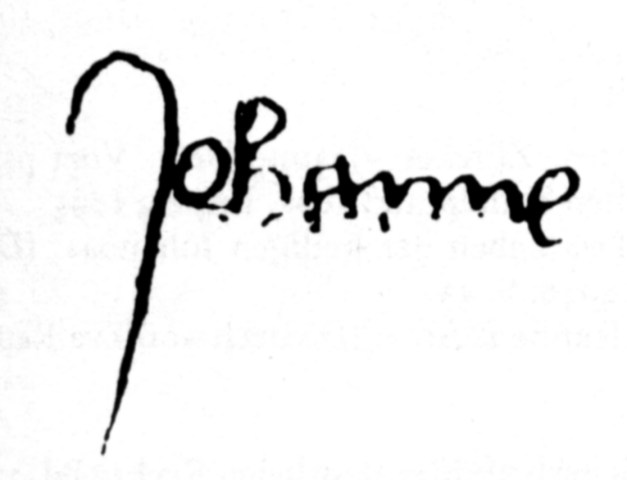
jehanne_signature1

I’ve always been highly conscious of lingering energy, though part of it may be my imagination, I’ve been to where Martin Luther King was shot, and it made me shiver a little, even at age 8, not because of what had occurred there, but because I knew without a doubt that he had been there himself. When I walked up the Statue of Liberty, despite the terror at the way it swayed in the storm, with every step I thought of all the great footsteps that were beneath mine. At Versailles, it was not the princes I identified with anymore, it was the poor running through the palace seeking the king and queen. For ten years I dreamed of the Hall of Mirrors, I pictured the gardens outside, it was a feat of unmatched la gloire! and at this age when very little surprises me anymore, I found that the Hall had been greatly enhanced by my imagination, I almost vomited in a London bathroom that looked similar.
What caught my eye was something behind the mirrors: my face. Would it only take one change of clothes, perhaps a haircut, to let me see what these mirrors must still remember? I think of young men and ladies looking at themselves in these mirrors, and I think of the revolutionaries running, always running in my imagination, through that hall, did they stop and stare? Did they know what to expect? Did it infuriate them to see the excesses, or were they awed by its magnificence? When I step inside any cathedral I have the same argument with myself–how many people could this cathedral have fed if it had never been built? Will Durant suggests that over-control of the population, leaving the failures in charge of procreation, is the downfall of some civilizations. If they stalled, is that what gave Marie Antoinette enough time to escape? And when they found the rooms empty, did they walk or did they run back out? Did they touch
anything? They tore down weather-cocks from the houses of the wealthy. The chambers below the Hall of Mirrors are pathetic, whitewashed, dark, low-ceilinged, even depressing when the windows are open, the library of men destined to never be great, to be filled with knowledge but fail to outlive the king. The bed where the queen would insist the entire court watch her give birth, how does a queen spread her legs? how does she scream? does somebody consume the afterbirth of the sun-king’s descendants? I can’t even clip my fingernails without thinking of Sir James Fraiser’s list of peoples who consume fingernail clippings and earwax in the endless battle against bad magic. I take a particular pleasure when in large cities of clipping my nails out the window, here’s something that won’t kill anyone it lands on, isn’t as immediately disgusting as spit, and gives the recipient the opportunity to retaliate. I suppose the only thing better than that would be to just slit your wrists out the window. I’ve heard that defenestration isn’t nearly as funny as it sometimes seems.
When I stand at the windows, I don’t care for what I see, but I care for what has been seen, and by whom. I care that this view once meant something. I care about the ways that stone steps are so weathered by footsteps in the Louvre as I trot to the top floor with one hand prepared to cover my teeth if I fall. I send out little prayers to the dead, even the dead who don’t deserve it, for what we’ve taken from them. And that’s the point I’m trying to reach, which is that I feel like going someplace allows us to take a little bit of it away with us, we don’t need to take photographs because we’re taking something of the essence in our hearts.
But…can it run out? I think so. But isn’t there more to it that I feel? Yes–it’s that I only take away what I’m seeking, or what I feel or know is there. I never take away ghosts I do not know. Which is why I feel nothing of kings and queens–for Marie Antoinette’s toilet, I only wonder what that second little hole is for? Céline says tampons and smiles. I wonder about the revolutionaries, not as revolutionaries but as people, because I identify with them as people, I identify with standing in the houses of the wealthy and poking my head around and gasping. I take a little bit of the revolution away with me, god knows there’s none of it left at the place de la bastille. Between the revolution and napoleon, the messiah comes and history gives way to modernity somehow, it’s not the Champs-Élysées of Joni Mitchell (or David Geffin, if you’re going to get picky) I walk down, no, because on one hand I’m trying to figure out where I can possibly throw a clementine peel since there’s no goddamn trashcans, and on the other I’m trying to figure out how
long I have before that quiche and its burnt chevre explode from my ass and how many years I’ll be put away for manslaughter afterwards, sorry Paris, is this still Paris? no public toilets or trashcans? That’s just fine. Because I’m crying softly for the Champs-Élysées of Watteau, and if forced, of Degas, and all I can feel are the goose-steps of Nazis, I can’t even feel Napoleon. Modern, modern is when you order all your soldiers confirmed infected with plague to be shot in the name of mobility. Do you remember what happened to your car-phone? Some would call that cruel, and some would call it merciful. I’m not afraid of death, so I call it kind. I can’t bear to walk all the way to the Arc de Triomphe, mostly because of the diarrhea, but also, let’s be serious, why do I care to see a testament to ultimate failure? It breaks my heart that Napoleon broke up with Josephine, and that’s why I hate him. That’s the only reason I hate him. Because I’ve read his love letters to her. Monogamy, the one thing princes cannot overcome, even Leonard Bernstein had to marry against his sexuality to assure himself a job conducting the NY Philharmonic. Life is rough. I don’t have enough money to see Blake’s illuminated manuscripts at the
British Library, and I don’t have enough to see the uncensored copy of Nin’s Winter of Artifice at the Biblioteque Nationale. Life is rough. Four different people have told me in the past 24 hours that they’re the only person who truly understands me. Life is rough! I nod weakly. The whole family is worried that I’m drinking too much and not eating enough. My first reaction to returning to Ameriker was to lose fifteen pounds. My mother says my belt isn’t tight enough, and to think these pants made my package look huge just last November!
Unlikely as it may seem, Jeanne d’Arc has always been one of my heroes. I remember where I was sitting precisely when I first saw Bill and Ted’s something-something Adventure, and two characters jumped out at me: Billy the Kid and Joan of Arc. I was better situated to pursue Billy the Kid’s footsteps, so I’ve trekked through deserts, cemeteries, ghost towns, I’ve stood on cliffs, been in the dirt houses of those people we still called Indians, I’ve seen the bullet holes in the walls, my skin has cracked in the dry heat, I’ve been blinded by the dust, I’ve been thirsty, I’ve been tired, I’ve held guns, I’ve felt my skin burnt by trucks on fire, I’ve been cold at night. And always that one foggy image of Billy the Kid, the idea of him hiding in bedrooms, his youthfulness and sharpness, his inherent greatness. One night at a bar Scott and I decided a new rule was in effect: wedding rings meant nothing, we would chase married women if they dared to look us in the eyes. In a way, murder is okay when it comes to legends. Daedalus is an object of pity, but I become uncomfortable to think of him as the murderer of his nephew. But Jeanne d’Arc…what has she meant to me that has lasted for so long, what does she mean to me now? How is it that I continue to feel attached to her? It has something to
do with all three of the things that have obsessed my aching mind since first my eyes were opened and I was ashamed, many years before I could even spell my own name: death, sexuality, and god. Since then it’s been Dreyer’s portrayal of her, and Shakespeare’s, and it’s been the way she’s haunted my memories of my future, the way I’ve always felt like a sacrifice, the way I’ve presented myself as the goat destined for Azazel, the way they tested me for scoliosis twice every year until I was 16 because they couldn’t understand that every time a butterfly died the muscles in my back would grow a little bit weaker. I haven’t quite learned to lift with my legs yet, though I’ve seen the signs a thousand times, I just never paid attention.

Paris

It was only during this past year that it slowly dawned on me that I’d been subconsciously surrounding myself with happy people for years now. Not that I’m placing a moral value on anyone’s happiness, but it clears up a lot of questions I’ve had, the main one being: why is everybody I know addicted to cocaine and yet unemployed? Sure, some of them were trading sex for it, and some of them were involved in outright prostitution, but in general, even this was done more for the sake of experience than by necessity.
I had nearly fainted in a wine store–all eyes were on me as I collapsed, something about the air–and as we rushed back through the rain I mentioned ‘I may be the craziest person I’ve ever met.’ She replied ‘everybody thinks that about themself,’ which was when I realized oh my, she thinks I’m one of them. What do I know about them? I know that about six months after I left town a monstrous bout of herpes spread like the plague through all my old haunts, and when we drew diagrams we found we could trace it back to her. I’d never been so happy to be celibate. I knew that they all fancied themselves poets, and that they all had stories of mystical pasts that sounded like Waste Lands built on the wikipedia entries of Kerouac and Jim Morrison, and I knew that all of them had become pudgy and puffy and shiny with sweat in the time since I’d last seen them, their scars were showing up deeper and more permanent, they all looked and smelled like Venice. The truest sign of happiness was the pursuit of a bachelor’s degree in French. Getting an English degree means you can pursue a job in any field but you’ll never find one; getting a French degree means you’re not suitable for a job at all and yet you’ll never lack one. And so far, I haven’t met anyone who actually likes Paris. The French are nasty, they hate Americans, they’re proud and arrogant and insulting, one feels alienated in Paris, its only redeeming quality is its cafes, but gawd dan, i dint had to leave Biloxi to know dite shyit!
I travel differently than i used to teach people to when i worked at the travel agency-–that’s because I survive on the generosity of my friends, their friends, and their families, the promises I keep receiving that I won’t be let to starve, the fact that I can wash dishes very well, and that I don’t have enough common sense to make wise decisions. I’ve gotten discounts just for looking pathetic. I took a job working for the Republican party right up through the Democratic victory, so I can thank Senator McCain for sending me to France. I also took a newspaper delivery job for less than $2/hour, which turns out to be perfectly legal in Massachusetts, you know, to be denied a contract and paid a quarter of minimum wage in unsafe working conditions. But these things happen when you have a dream, and my hollywood life wasn’t complete until I made this trip and took part in the most beautiful romance the world has ever known.
Paris: never in my life have I felt such comfort in a city, and not once in all the time I spent there did I experience even a hint of rudeness–in Paris, where even Parisians warned me that everyone lives ‘fast’ and wouldn’t bother to look me in the eye, I experienced nothing but patience and politeness. I go faster than Parisians, I’m colder than they are, I clench my fists sooner, and I don’t apologize nearly as fast. Dammit, I’m an American! I followed two rules: don’t speak English; despite being a vegetarian, taste everything that’s placed before you and called food. And every morning, as I longed desperately to be back in a cafe, reading, I swore I wouldn’t do anything in France that I could do just as well in the US. So, off to the trains, off to the streets, the coldest months of the year, record snowfall in Paris, the evening news mocking people who slip and fall, to wander, miles and miles, trying to reach every street, trying to come to terms with a city I couldn’t understand, trying to make it in some way a part of me, coming home in the evenings to Nathalie or Celine looking at me like I’m a bit crazy for daring to walk alone between Pigalle and Clichy near midnight. But it was there–the road between the two, Clichy being beyond the city of Paris, that I began feeling comfortable with Paris, truly comfortable. Montparnasse, it has its charm, but charm doesn’t make up for lost color, and all of the places once haunted by the heroes I worship, they’ve been reupholstered in the past eighty years, and
they charge nearly $7 for a teabag, and if an atom remains of their former glory, god knows that atom is hidden in the dankest nethermost crooks. What slight pleasure I had in visiting the cafes was all but eliminated the moment I saw a balding man with a smile and an expensive camera photographing the cafe below where Brassai once lived. There’s only one way to absorb the city’s ghosts, and that’s by walking it. And in walking I began to remember the people who have walked, Virginia Woolf in London, Wordsworth across the Lake District, Dino in Charlottesville…and, oh, right, Baudelaire to find sex, Rousseau to find vehicles for simple philosophies, Henry Miller to find a meal, everybody’s walked in Paris. I walked, I walked and walked, I walked so much I thought my legs would fall off, I walked until I didn’t feel like I was seeking something anymore, I walked until I learned how to blow my nose in public, I walked until I felt comfortable pushing the beggar-mafia-women who would approach me and ask if I spoke English (Celine said it would be a bad idea to suggest I’d give them money for sex), I walked until I knew how to carry a baguette at 7pm without it touching anyone else, and I smelled like goat cheese and cleansed my bowels with coffee and when Americans asked me a question, if they didn’t precede it with ‘pardon, monsieur’ I just stared at them like I’d seen the French stare, and I learned to frown like the French and to make puff sounds with my lips and to acknowledge things with frequent ‘mm’ blips deep in my throat. In the evenings I would head back to Nathalie’s and we would discuss our dreams in English. In the end, Paris didn’t make me ill, but Florida did. And I write this now, with the intestinal hell that is Florida, Florida, Florida. Paris, I like you very much, and I miss you frequently, in fact, I miss you more than I’ve ever missed a city in my life, all those smart rich kids who don’t know the value of a nickel, they’re idiots to hate you so, they’re idiots because they visit the grave of Jim Morrison and don’t even bother to shed a tear over the fact that maybe Abelard never really loved Heloise.

But who cares? I’m in love!!