film: Wegener: Der Student von Prag (1913)

Der Student von Prag I was looking forward to because I’d read it was a modern adaptation of Marlowe’s Dr. Faustus. If that’s the case, then so is Crossroads about Robert Johnson. Really, if there’s only one significant figure in history who sold his soul to the devil, then Christians should assume they’ve pretty much got Satan beat. What are the differences? Faustus is not needy, he’s brilliant and bored with life. Balduin is a depressed student who’s utterly broke. It becomes almost silly to see him, in scene after scene, sitting at a table in the foreground, surrounded by pretty young people dancing and partying, as he sits depressed, head on hand. But we know he must really be depressed because someone comments that he is the biggest partier at school. Almost immediately he strikes a deal with some old man, getting a large amount of cash in exchange for anything in the room. The man doesn’t exactly take his soul unless you’re going by Sir James George Fraser’s subjects’ beliefs that the soul (as a manikin) can be captured in a mirror, or a camera, and so forth. Thus the old man/devil points to Balduin’s soul in the full-body mirror, Balduin’s daemon steps out of the mirror, and Balduin is left alone with his money. First he’s freaked out, because he has no reflection anymore, but second, he’s fine, because he’s got all this money. The rest of the film is spent with him trying to get by in everyday adventures, and continuing to freak the fuck out when his daemon shows up to make precisely the sort of remarks a ghost would make, viz. “wherever thou goest, so shalt i be” sorts of things. And in what would be today the nudie scene, Balduin’s hooking up with the Countess when she finally notices, that which the audience has been squirming about for five minutes, that Balduin has no reflection in that enormous mirror reflecting their kisses. And she flips out, and suddenly Balduin’s daemon pops into the room, and all hell breaks loose. By this point you should be thinking: well, if his daemon keeps showing up, does that mean he can smack it? Good point. But he wouldn’t want to fight himself because, after all, he’s the best swordsman in Prague. So he pulls out a gun to kill himself, the daemon pops in, he shoots it, and it disappears. Now he’s very pleased with himself, because we’re pretty sure, from what we can tell, that his reflection has returned to the looking glass. And what now? You guessed it: Balduin instantly dies from a gunshot wound. This ties things up nicely as long as you don’t think about technicalities (…was the external daemon responsible for Balduin’s living? Or if one doesn’t require a daemon to live healthily, then why does having a shot-up daemon inside oneself lead to death?). Give me flying body parts and devils any day, rather than this ending. The film just itches for better technology.

If we feel like getting interpretive here, I suppose we could point to the extraction of daemon via mirror is strikingly close to the extraction of daemon via camera–which places every audience member in the role of the devil. Who but we has paid cash to observe the actions of this man’s extracted soul, to view the tragedy of his life, like gods over Job?

food: sea urchin

I generally find cities frightening. London was fine because it seemed to me rather a large village, but Boston? Every time I go to Boston I get a headache, and very tired, and I need to go home and get to bed early. New York? Terrifying. Manny and I went there last month to see Aretha Franklin, and without a fair bottled menagerie I don’t think I could have made it home okay. It’s just that the buildings are so tall, and the cars go so fast, and there’s so many people everywhere you look, and the lights and sounds and smells, oh, it’s all too much for one who becomes overwhelmed just trying to choose a jar of peanut butter at the supermarket. And so, upon my return, the plan was to get imbibed, and to stay imbibed for the duration of my trip. Perhaps that would be enough to take the edge off and make me fearless of the city. It worked when it came to airplanes, so why not?

Needless to say, the plan was a success. And on Sunday Jordan and I were making our way up and down Upper West Side streets trying to find ourselves a cheap French restaurant. Our feet hurt because we value fashion so highly. But seeing a sushi joint, Water Moon, it occurred to me that if I might ever have a chance to try toro, fatty tuna, always on the menus, but never available, it would probably be in New York. And they had it. $8 for toro sashimi. Okay, I can deal with that, the price of dinner for a small chunk of fish. Fish, if you recall correctly, is something for which I have a very physical aversion, instant nausea, even reminiscing about it, open a can of tuna and I’ll have to leave the room and drink a coke and shut my eyes for hours, the smell, the taste, the memories of black eggs being found in the watery gray meat…but this tasted delicious, so very rich, all the wondrous essence of regular tuna now a thousand times more potent. What did I do before this existed? Jordan I sat quietly as we finished off the garnishes, mixing them with wasabi and soy sauce. And then, after some deliberation, decided to end our trek for lunch right here. She said it was my vacation, so it was my decision. So, as I’m apt to do in any situation, I ordered omakase, which resulted in a nearly $40 bill, and a second helping of toro, which tastes twice as good when you can’t afford it. Sparkling sake, and our bottle of gin that kept us going all day, and things were quite well, which is important when the chef presents one with a sea urchin, and you look at it, colored like the totems of Japanese fecal porn, textured like a tongue…
“And…what do you recommend that I put on it,” I asked, hoping, hoping he’d recommend I drown it in wasabi before holding my nose, nay, just drowning it, setting its car on fire, and leaving my gun behind. But there’s the problem…it’s a sea urchin. They don’t drown. And anything prefixed with “sea” becomes horrible:

Anemone: a buttercup.

Sea Anemone: a sedentary marine coelenterate who kisses you all night, “asks” you to go down on her, holds your hand in public, and stops answering your calls upon realizing that you weren’t making a joke when you called yourself penniless.

Cucumber: refreshing, and makes for a subtle body lotion.

Sea cucumber: If you were prettier, I wouldn’t mind the way you turn into a bitch every time something catches you off guard.

Dog: adorable.

Sea dog: So I was surprised to find that the first Greek person I met was a regular Aryan beauty, and began remembering all the post-9/11 propaganda about swarthiness, all the things that Princess Jasmine isn’t, and so, yes, it’s clear, all occidental notions of beauty blossomed in the Mediterranean.

Fan: someone who finds Jesus just after her boyfriend collapses to the other side of the bed, snores, and you’re left to wipe your own tears away, this wasn’t supposed to be how the first time goes, it wasn’t, it was supposed to be beautiful, he doesn’t love me at all, and the sunlight through the sheer curtains, like a hand, shows you the Holy Spirit in the flesh, and because you didn’t get off, you’re still technically…well, even Paul had to Become celibate, let’s be serious here, and spends the rest of her days getting crunk, showing her nipples off, and trying to convince others that this is the new good news.

Sea Fan: a horny coral. Wet, rock hard, pulsing, and of the Gorgonis genera. Gorgons are always bad news, because not only do they possess unfortunate physiognomies, but they’re also bitches.

Gooseberry: maybe it looks and tastes like a testicle, but…well, it’s still a berry.

Sea Gooseberry: This isn’t even a berry. It’s a jellyfish that swarms.

Hare: eats carrots.

Sea Hare: a slug.

Anyway, the list goes on, and the point is, I wouldn’t eat a regular urchin, even if it goes to church, and now I’m faced with this horrid sea monster that comes packed in loaves like pate, a food I’ve never eaten, but now doesn’t seem half so scary as before, and a smiling sushi chef whose eager anticipation keeps his eyes from blinking. Yes, fine, I’ll eat it. But there’s so much of it I’ll take a bite first…the consistency of toothpaste, but very cold, okay, just eat it, ignore that sharp I-Haven’t-Bathed-In-Two-Weeks-Kiss-Me-Down-There delicate quality on my tongue, and then…yes, finish the other half. And all the Nietzsche in the world isn’t enough to help me overcome these thoughts, crushed under the stone that is repulsion, that is…that is…

Delight upon finding that, indeed, salmon sashimi tastes identical to lox, and I recall my grandparents, during Sunday morning brunches, commanding me to never, ever, eat sushi, not on my life, not on their lives, it’s unsanitary. Well, the restaurant we went to has an unusually great number of offenses according to the Board of Health…but, even if it’s unsanitary, it was a delicious lunch, and as I trickled asleep on the subway home, I felt immensely proud of myself, you know, eating a sea urchin like a real Ubermensch, yeah, yeah, yeah, I lost my page in Nietzsche as my head fell on Jordan’s shoulder.

film: Carol Reed: The Third Man (1949)

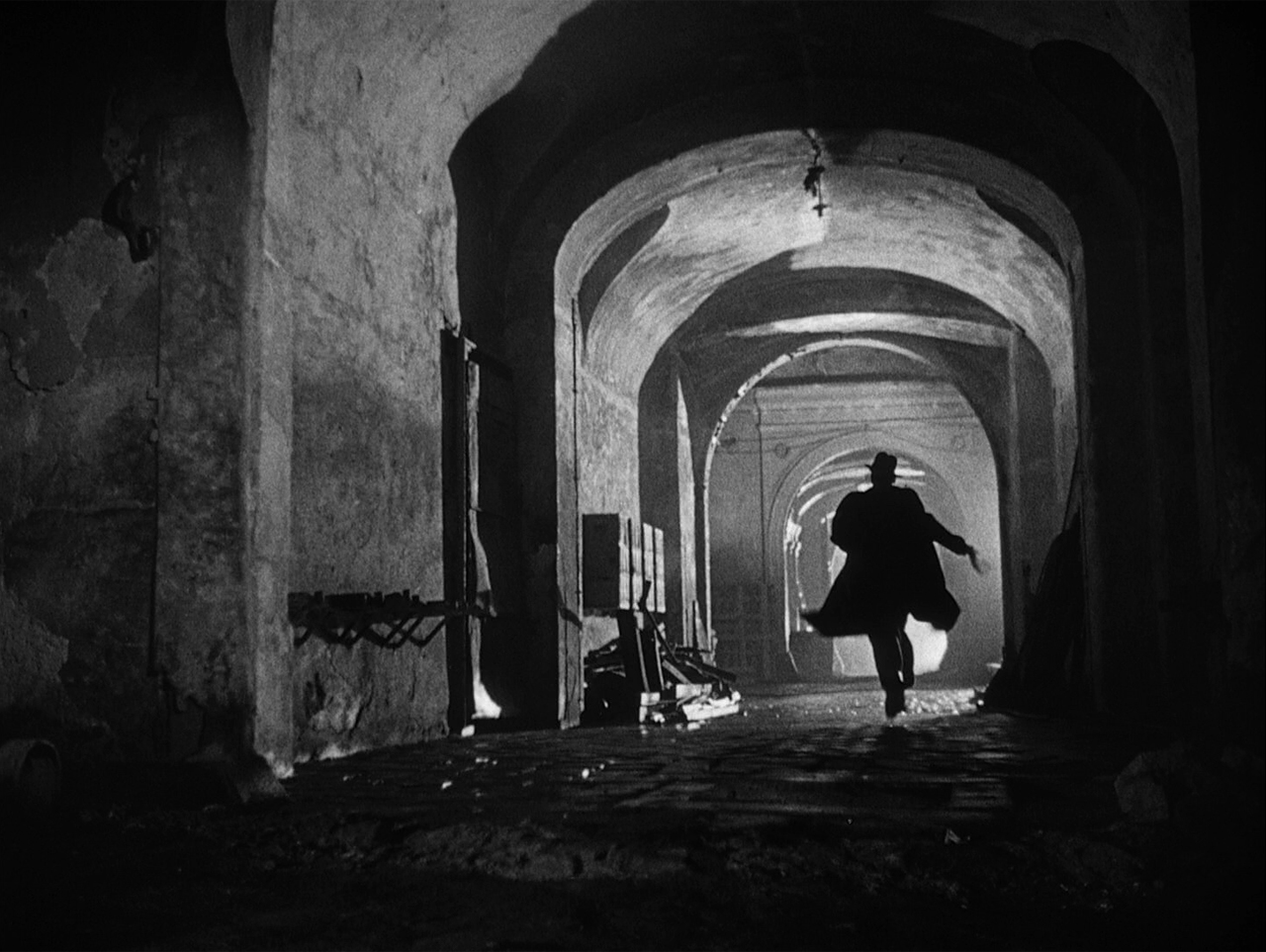
the-third-man1Walking out the door each day and ten steps later reaching the doorway through which Graham Greene passed daily for years filled me with some sort of awe. I also had to walk out of the theatre during End of the Affair because it made me so miserable, I left and cried. As much as that one affected me, The Third Man did quite the opposite in my reading it. I recall long nights trying to pay attention, failing, and finally deciding to not read The Fallen Idol, which the book also contained. Thus it was with but little pleasure that I anticipated viewing the film for which he wrote the novella. Recently I’ve been finding that films with interesting opening credits tend to be fascinating films. And so this was–the credits are set over the strings of a zither being played–and the credits said that zither music is provided by Anton Karas…which gave me the impression that the full soundtrack’s music would be zither. Impossible. And that is precisely what sold me, repeatedly, on this film. When an orchestra is supposed to hit, when we should be most frightened, anxious, bothered…the music explodes, joyous, colorful. The film begins with a very Soviet montage, and that sort of quick humor that reminds me of Hitchcock, that in its lightness portends fearful gravity, very Tao Teh Ching when removed from pure theory (what!?). That said, as much as I enjoyed much of the film, and as much as  I had to battle fierce nausea while pondering  Alida Valli’s fake mole (reaffirming what Hawthorne illustrated, though I was nauseated anyway…yes, I had to turn off the film until I was feeling well again, I had to watch Dick Van Dyke or something), and as much fun as it was to wonder if Orson Welles was actually acting or just being himself…by the last half hour I was checking my watch every few minutes. That means approximately ten times. That’s to say, I was bored.

But, when one watches the Criterion Collection, one does not do so to be entertained, for entertainment is a vulgar pastime, and we discerning types lend our eyes to the screen for the purpose of understanding our own lives better, at the very least, through measuring the length of shots (and of shadows in film noir), and trying to decide what the film is really saying, beneath all that mean profit-making nonsense. I recall enjoying Brighton Rock a lot more, even if the protagonist was a stinky old whore.

film: Mankiewicz: Guys and Dolls (1955)

2 may 07

I’ve began to wonder if the Good old films are as witty as they are because the people who made them built themselves up from roles in the production of silent films, from writing the stories to the intertitles, perhaps even the unheard dialogue, these are people who understand an element of film the past few generations have taken for granted. I do not know if the music to Fantomas was its original, but it worked on me to create nausea, great dis-ease, in the same way that The Game does so with its golden-tinted film. Sound has importance–and Guys and Dolls, although adapted from someone’s book (of stories, I think), is written by one of these people who built themselves up from the silents. The dialogue mostly goes past me unnoticed, and I enjoy watching the acting, especially of the big stars, Sinatra, Brando, Jean Simmons, even the smallest expressions, you know why they enjoy their names. Simmons and Brando especially made me want to fall in love, the way they fought it quietly, and give in passively. The womens dance numbers are mostly confined to a New York nightclub show, which means a few high kicks and some fucking obnoxious accents. The mens more than make up for this–being fascinating to watch, both individuals and group–reminds me that only in singing and dancing can anyone truly make full use of their body. The other delights are the scenes in Havana, not only because of the love, but because there’s finally some good dancing from the women, (I mean, this is a movie about men who gamble), and also a killer fight scene. Oh, and Simmons and Brando are also so damn attractive I can’t take my eyes off them; there’s a good reason why I did miss an expression. But some of those lines in this film…brilliant. What I can’t stand, oh, what I sometimes could not even look at, are the colors, being everything rich and gooey you’d come to expect from a 1950s cookbook, and I have a hard time keeping my stomach under those conditions. When I saw this live, in which Matthew Hunt plays Sinatra’s role, his performance having burned its way to my heart, even eight years later, the colors were strong, but in a modern “let’s play 1950s” way–not a technicolor way, but emphasis on deep greens, purples, oranges, and I seem to recall much zoot-suits where this film seems to have everyone in much cleaner cut…okay, breakfast is getting cold, i’m being yelled at.

exhibit: Franklin Institute: King Tut

The King Tut exhibit in Philly was, of course, glorious. Because the objects on display were so stunning, the sorts of things we’ve all seen in photographs since birth, the museum fought hard to turn itself into place of melodramatic mystery, and if not for the hoards of visitors, it would have felt exciting, all the darkness and sounds and colored lights cast around. Too bad for photography, and too bad for fake gold, because when encountered with the real mask and the real gold, it doesn’t seem nearly as great as you’d imagine–I mean, is that what gold looks like? Two things strike me: the use of blue, which always seems to me something like magic; and the pieces of wood that look like they could have been cut down yesterday. Yes, it is daunting to think of this empire lasting 3,000 years, and how, at any point of time, an Egyptian could not imagine that a future day would come in which Egypt was not a world power, The world power. And yet there’s Rome and it’s lengthy stay. And if that isn’t enough to convince us of mutability, there is our dear empire’s young age, and lack of cohesive mythology, and to see that art, to see that people once valued beauty, and were masters of it, in ways that we will never tolerate again, that these were people, whose stories we do not know, who gave us Christian mythology, who lived lives and die in history–just looking at a tiny fragrance bottle carved in the shape of a man carrying a barrel, that is enough to make me feel inexorably small, terribly put in my place. But because I was trying to get out as fast as I could because I was feeling very sick, I did not read about each piece, and I sat outside in the grass, drinking ginger ale, being the center of the universe.

film: Griffith – The Birth of a Nation (1915)

I could never figure out how a film could possibly turn the KKK into heroes–I could never imagine that someone really could make a film so sympathetic to the South. Knowing that this film is greatly responsible for the KKK’s second rise (or so I’ve read), I do wonder how much of it has influenced the Southern mind–I mean the “South will rise again” mind. The North looks like a bunch of crooks, and while my whole life I’ve been a big fan of General Sherman and his march, watching a similar episode occur here kinda broke my heart, kinda made me hate the North. Lincoln is pictured well, because he supports the white man, but all those black characters always have their eyes wide and spinning, bouncing around and lusting after power and sex with all the determined appearance of any Disney villain. Meantime, the South is stripped of all its rights as the blacks are placed in control of it, becoming its judges and its juries, persecuting the whites in any way they can, the whites are refused voting rights while the evil blacks vote multiple times, the blacks begin treating the whites like second-class citizens, not giving them even the courtesy of allowing the whites to share the sidewalk with them, as they all quit working in the fields, quit working altogether and spend their time dancing like animals, unlike the civilized ballroom dances we see the white soldiers partake of. There’s no doubt in my mind that by the time the KKK shows up on the scene, I’ll be firmly in their favor. At least for the duration of this film…(I’m only half through…but I had to write this).

My other observation is this: though I don’t know what comprised the original soundtrack, the one I’ve been auditing includes what I seem to recall as Dvořák’s 8th Symphony–for those of you counting, and assuming I’m not mistaken, that’s the one right before his Symphony from the New World–though, unfortunately, also right before his trip to the United States, about which he commented “I am convinced that the future music of this country must be founded on what are called Negro melodies. These can be the foundation of a serious and original school of composition, to be developed in the United States. These beautiful and varied themes are the product of the soil. They are the folk songs of America and your composers must turn to them.” Though, as I also recall, there’s little evidence of anything but European influence in the work. It would be ironic were the music the 9th Symphony, but not so much as it is…and perhaps a reason to jump with laughter would be if the music was all Scott Joplin, but…as it is…not so much. Except this: if Wagner can remind us of Nazis, Dvořák can remind us of the Negroes (that’s a politically incorrect word, but I wouldn’t say “Cowboys and First Americans” either…it ruins the point.)

The Birth of a Nation did not fail–I found myself quietly urging, shouting, “hurry up KKK! hurry up and save them!” And was grateful when the evil blacks who had overrun the town, its government, its good people, raping and rioting through the streets, were finally put back in their place, their votes taken away, by the good KKK. That’s worth something–that this fine art, still brand new, has the power to take a liberal Jew of modern sympathies, and turn him into an old fashioned white supremacist! That says something else: that the belief system of white supremacy is too weak to bear itself; it takes a film of falsities and melodrama to rally its troops in favor of the cause.

4 May 2007

film: (Chaplin) – Tillie’s Punctured Romance

I don’t care if it is the first feature-length comedy ever, because it still sucks–which, I mean to say, is that it contains everything I never liked about American comedies. The majority of its humor is from slapstick violence, some of it’s from alcohol, and a lot is because Tillie’s a real beast. I suppose this would fall into the category “farce”–the same as Comedy of Errors, in which the main purpose is to get laughs, and the only resemblance between two is that despite excessive beatings, nobody seems to get hurt. It grows tiresome to watch these people who seem so alien to their own bodies, falling over everything, having difficulties running or moving or even thinking clearly. However, one sequence of bandied violence, between Chaplin and his crooked girlfriend, was nearly identical to a sequence in The Thin Man. Both begin with one person bumping the other, and end with the man raising his arm back across his body about to strike the girl, and then stopping when noticed by somebody else. In The Thin Man it’s funny because you can see the characters in love, you can see how well they get along, and it’s quite endearing, their little battles of wit and this pretended violence. Yet in Tillie it’s only a droplet in the sea, it’s nothing–it’s not cute, it’s not sweet, it’s not funny. Yet–the one thing that confuses all is when Chaplin and his girlfriend are caught making out. It’s as if they may love each other after all. I don’t know–perhaps I don’t have a good sense of humor. I began watching a Will Farrell movie–uhm, Anchorman–everyone was talking about, and had to turn it off after fifteen minutes of not even finding something to smile at, and the same goes for School of Rock which I watched half an hour of last night. Not funny. I can tell when I’m supposed to laugh. But it just doesn’t do it for me. Yet the Dick van Dyke Show does. In any case, I’ve decided life is too short to watch any of the other Fantomas films, or Tillie films. Fuck that.

film: Walters – Please Don’t Eat the Daisies (1960)

I suppose it’s rare that one can watch a lengthy portion of a film and miss every shred of context.

Something that has angered me for years: the general perception of the ending to the musical Pippin. Wikipedia sums it up: “Pippin realizes that he has given up his extraordinary purpose for the simplest and most ordinary life of all, and he is finally a happy man,” which is precisely what the actresses I spoke to told me. But it seems quite obvious, especially given Fosse’s involvement in changing the text of the play, that the play actually ends sadly–that is, yes, Pippin “has given up his extraordinary purpose for the simplest and most ordinary life of all” because he finally backs down in the face of suicide. He ends up suffering that which most people must suffer, accepting less than their childhood dreams, and smiling all the meanwhile. And so he smiles, and audience exits happy. The more cynical ending is one in which Pippin’s son is displayed as the next victim of high hopes. It’s the most fucking depressing play I’ve ever seen, more tragic than any Shakespeare’s tragedies (his comedies are a different matter) because there is no justice, and at the very least, the characters suffer past the curtain’s fall.

So when I saw a bit of this film, Doris Day, dancing and singing with children, loving tiffs with her husband, old friends helping out the family…I thought, ah hah, this is precisely the sort of film I enjoy most: it has no plot, and everyone is happy throughout! I could watch something like that all day. No, this is not that at all, behind a mask of “comedy” it’s a film about a man who finally earns the prestige he’s craved his whole life, and he turns into a real shithead as a result, which leaves his wife in an unhappy position of having to bow to his whims while trying to also create an equal marriage–certainly, she’s a housewife, but she’s raising four children, has a keen decorating sense, and can sing, dance, and play the ukelele. She makes a comment that suggests all housewives have their special abilities, and their dreams.

And in the end, with the possibility of being made a fool of, and somewhat thwarting that by publishing a scathing criticism of himself, the husband finally returns to his wife, where we are to assume that when he says he’ll change, he means he’ll stop doing the things that he does well and enjoys, and put their lives back to his pre-fame, when he cared about other peoples feelings, and did not care for “names”–and we assume that the cab-driver who wants to be a playwright will be a perfect match for the actress sans morals who may or may not be lonely, we’re unsure based on everything handed to us. The plays ends with uncertainty–but is billed as an outrageous comedy, with a happy ending, a Doris Day ending. I’ve never been so depressed on this morning in my life!

film: Feuillade: Fantômas – À l’ombre de la guillotine (1913)

Reminds me of sitting in that fucking theater, twice a week, through the lengthy art films, trying not to sleep, sometimes sleeping, eating candy, eating candy, eating candy…this one was “murder” to sit through. Hahahahah. No, the last fifteen minutes got me to perk up slightly, and say “ah hah! brilliant, Fantomas!” and then worry for the innocent. So, what did I notice? First, I had a difficult time following the film since it’s in French, and I do know some basic nouns, pronouns, and verbs, and then a few other words that look like English, and a few others I’ve picked up along the way, and I found myself able to generally decipher the meanings–sometimes due to knowing what the detective genre turned into. The acting, of course, was as if on stage, and very descriptive in itself; I even laughed at Valgrand’s expressions as he tried to drink his drugged tea while attempting to remain polite despite the taste. I read this comment on it mentioning “this active space of film no need special effects or even camera travelings”–and, like noticing that The Who’s Live at Leeds doesn’t have hi-hat, it struck me that indeed, the camera doesn’t move at all in this film. There is a scene during which one watches the people step into an elevator, the doors shut, and the elevator moves, and then one watches as the elevator moves past the next floor, and the next, and the next, each with its own cut. I wondered why this was shown at all, and if there were perhaps better ways to show it? First, I thought, perhaps it’s just trying to exploit something a bit fancier than people usually see. Then, I decided that it was the only way to show how many floors high the room was. How else, without sound, without movement? The sets are remarkably like ones on stage: there’s the center, there’s the hidden areas to the left and right and rear, concealed by doors and curtains, and the audience is always in the place of the camera–there’s never any “practical” area of that part of the set. So, in words, I can describe this well, however, it didn’t hold me like Cabiria did–thus I can see now why the epic Cabiria so influenced Griffith, a film so much more animated and mature, and only one year later.

26 april 07

art: Impressionism

ever since maya and i began working on our project i’ve been trying desperately to make sense of art. i have a very difficult time giving a proper opinion on works of art, because my sense of beauty is somewhat skewed. when it comes to music all i care about is whether or not the song is catchy–even classical music, if i cannot sing and dance along with the parts, i just don’t care for it. when i think of a scary encounter in a dark alley, i think of ella fitzgerald gliding towards me with violent scatting. when it comes to literature i cannot tell the good from the bad, especially contemporary poetry, which seems to me the ultimate foray back to innocence, and most writers i’ve met seem to work very hard to mask complete ineptitude and habitual good luck. (not that i know a good poem when i see one.) no, in all things, i want a throbbing passion to be amplified, anais nin, astor piazzolla, the interactions between nick and nora charles, truffaut’s jules et jim, the shape of your lips and heat and taste of your mouth, tu fu, françoise sagan, tagore, girls dressing up and dancing for each other, jacques brel, babe: pig in the city, the color of your eyes when you’re being true…if i’m not laughing and crying with joy and anguish, if i’m not breathless and dying to stay awake, then i just don’t care. i just don’t.

it’s how i choose my friends.

when it came to art, the only artists who really affected me were durer and rodin. there’s something of flaming self-confidence in each of them, you can see it in the way durer painted himself, so handsome and dandy, and in the way rodin sculpted balzac, so great but so monstrous. yes, self-confidence is sexy: last year i found myself falling in love with a girl merely because of her posture, i just Had to know her. recently i attended a play and could not, could not for life of me pay attention because of the way the stage-hand carried himself, the ecstatic arch in his back, the light and sureness of his stride, it contained infinitely more humanity than any of those characters on stage. confidence.

and finally i’m standing in the boston mfa, looking at works of impressionism and just not understanding. why were they condemned or disliked or mocked in their time? why should i be moved? why should i care? and then it struck me: i do care. i care because their subjects have no outlines, i care because they focus on light, i care because they emphasize substance over form. this is serious.

joseph and i got in many fights, generally because i had a difficult time being part of his way of life, which was based on two opposing theories. the first theory was “no expectations,” a result of the turbulence inherent to a poetic lifestyle. the second theory was “be prepared,” which he never stated in so many words, but implied it, mostly because he was an eagle scout. he was always torn between ideals and reality, and because i am nowhere in between, in my absent-mindedness, in my naivety, in my perpetual childhood, we never really got along, though we were usually together. usually sighing over girls who had slighted us. he wrote a story about me, and i kill myself in the end; he made it into my novel, and i sent a plague his way, but i didn’t kill him. we’re so sentimental–how does that concern confidence, applying idealized pasts to a trivial future?

i’ve learned these past weeks that many concepts and terms are false, implying a singular definition, when really there is a whole spectrum represented in each. it’s why i can’t get married. every day things are becoming less absolute to me. there is a gypsy word that means both “tomorrow,” and “yesterday.” “living in the moment” is not one thing–it is many ways of being, and it shouldn’t imply that one has no responsibilities. druids were fierce warriors because they believed that at the instant of one’s death one was reborn as something else. life was eternal, it was valued differently. the ancient greeks and vikings had no measure of time, measures of time were symbolic, these people built with wood. was this a measure of confidence, as opposed to the egyptians, as opposed to those who built new york? how does one’s confidence affect one’s perception of time, and by extension, one’s perception of responsibility? confidence can remove us from the present to the future, but too much confidence for too long, and we forget that there’s a difference between now and later. you’ve noticed the life-cycle of empires?

the idea of “no expectations” sounds delightful. without expectations there is no disappointment: this is the key to everlasting romantic love. it ties directly in with “living in the moment”–which i’ve been taught when i was ushered through the experience of taking ten minutes to eat a grape. nothing has ever tasted so sweet as that grape, never have my senses been so consciously consumed, elevated. tantric. i felt naked–and we held our eyes closed–if i dared try eating like that, breathing like that, with my eyes open, you would see my soul, you would never question love again. but living in the moment also means bowing to one’s present desires, means hurting the people who love you, means following divine instructions that make no sense until later, tumbling isolated into the desert to argue with fire. it means a life of impetuous solitude, means human contact is flickering and sensual, intellectual only on the remotest level–and if you’re fortunate enough to have a short life, then this is ideal. rimbaud continually comes to mind, who lived a poet’s life briefly, and then fled into the very opposite. keats comes to mind, who lived a poet’s life internally, but whose girlfriend wouldn’t sleep with him. jim morrison comes to mind, who grew very fat and repulsive and reminds us that death is lumbering and hideous. how does one possibly live in the moment and die contentedly–i don’t mean peacefully, because i also mean violently, i mean an explosion and the sweetest of kisses.

and that’s what i see when i look at monet and his cronies: everything they paint is a reflection of light, which doesn’t mean all life is superficial. like in shelley’s “mont blanc,” we’re dependent on our senses to reach the essence of things, so yes, light is quite enough, metaphor and personification redundancies. and the movement of light, the minimally three-fold image of a reflection on a lake, a life of colors, running and melding, and yet a perfect picture of what our eyes know to be true, there, that is life in the moment–so dangerous–yet, to me, somehow preferable to stability. a beautiful life–a storyteller’s dream–an explosion.

23 aug 07