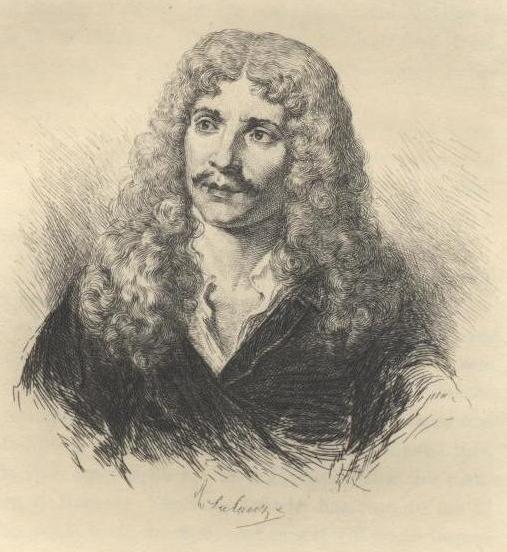
drama: Molière – The Misanthrope (1666)

Amidst the calls of John McCain in the last debate, “now, there’s just another example of Senator Obama’s eloquence” it’s rather fitting to read Alceste making the same arguments just about now, and to consider how Molière presents him. A friend mentioned that she’d heard Molière described as the French Shakespeare–I disagree, because Shakespeare, in my opinion, in his best work concentrates on the person rather than on the idea. There are, as I recall, some of his plays that seem rather to in a way typify ad absurdum, e.g., Titus as revenge play, Comedy of Errors, but as one moves through his work, there is something always very human about his characters–although most would disagree, I find even his Joan la Pucelle or Aaron worthy of our sympathy. But then, as I’ve stated before, I’ve been accused of naturalistic readings of Shakespeare, so I suppose I’m not particularly worthy of interpreting them. Meantime, I’m not even sure how one stages The Misanthrope, its scenes ending mid-conversation, and beginning again right where they left off, except now the room is filled with more players. Perhaps French drama demanded the players never enter or exit the stage mid-scene? Shakespeare’s comedies always use marriage as a device to end a play quickly, as love never seems very sincere here–and this is a comparison I can make easily: even the deepest love suffered by Alceste is easily broken off at the play’s conclusion. This leads me then to Peters’ discussion (‘The Rhetoric of Adornment in “Le Misanthrope”‘, by Jeffrey N. Peters The French Review) that one’s essence is cloaked beneath one’s social presentation.

So, what of language? There is the language of court, the language unadorned by rhetoric, which is later paralleled by the language of poetry, and the language of letters between friends. And what makes it all the more interesting is that the whole play is written in rhyming couplets, so that even the barest prose is rendered ornate by that which represents it. Alceste makes a reference to an old poem that, although simple, is passionate–and I can identify, considering the deep song lyrics presented by Lorca in his lectures–simple and breathtaking, anonymous authors, poor us.

But then…how much am I supposed to extract from a comedy of manners except what is obvious, the same criticism we always hear, that outward appearances are more highly valued than inner substance, even today on Wall Street, that we thought was a meritocracy until we found ourselves beset by misvalue.
Whatever you focus on will grow; or, whatever you fight with, you keep.

Whatever you focus on will grow; or, whatever you fight with, you keep. My day could easily be ruined, but with this laughter, just a few seconds of distraction and separation from the event, I lose anything resembling anger. Should it be that the only time I’m focused and centered with all my being is when I am angry?

1. We were making crepes for dinner, and S. was mixing milk and eggs and flour in a blender, but the bottom was not screwed on tight, so when she lifted it the bottom fell off and all the mixture spilled over the counter and floor and walls and cabinets, everywhere. I was across the room, and S’s mouth fell open and she just stood there with wide eyes as she watched everything pouring out–and C. immediately jumped up and began dancing and singing “oops! oops! oops! oops!”

2. I was running across the kitchen with a piece of moldy fruit and I accidentally kicked a chair–I may have broken my little toe, it hurts many months later still–and I hopped on one foot out the door, with C. hopping behind me singing “ouch! ouch! ouch!”

3. We got back to my car after a night out, and there was an egg splattered across the side of it. I poured water on it to try to rinse it off–but it didn’t budge. C laughed and laughed “you know why I’m laughing–because you couldn’t get it off with water!”

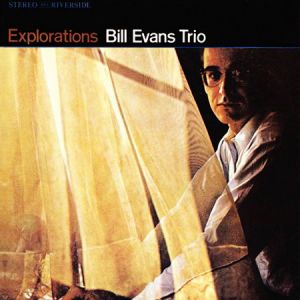
album: Bill Evans: Explorations (1961)

Bill Evans had terrible posture: this much is true. His early days, his limp cigarette and his suit; his late days, his plaid, his beard, his booze belly–Leonard Bernstein describes the modern jazz musician of the 1950s, the Ivy League sweater and the horn-rimmed glasses, and Bill Evans comes to mind: boring. How does jazz turn into background music? What is it about the structure of his chords and how big they seem, how they move up and down the keys like wet bricks and are yet so much more boring than Nat King Cole’s? There’s something so serious about Bill Evans, something so academic and maybe even sterile, that in this whole album I find nothing worth holding onto.

French Student Dinner #1

I could only cook pad thai, and she was sitting in front of me eating a tomato for dinner. This is French cuisine? A tomato and some salt? But I’d heard so much. Well, it all came soon enough, as soon as her jet lag wore off. Meantime, we’ve run out of money, and we’re back to the fare of students, and tonight it goes something like this:

1. (appetizer) tomatoes and cucumbers, diced, with olive oil, balsamic vinegar, herbes de provençe, salt.

2. (the main course) curly noodles, marinara sauce, garlic, tobasco sauce.

3. (dessert) assorted crackers and laughing cow swiss cheese.

we did not wash the dishes.

film: Nichols: Who’s Afraid of Virginia Woolf? (1966)

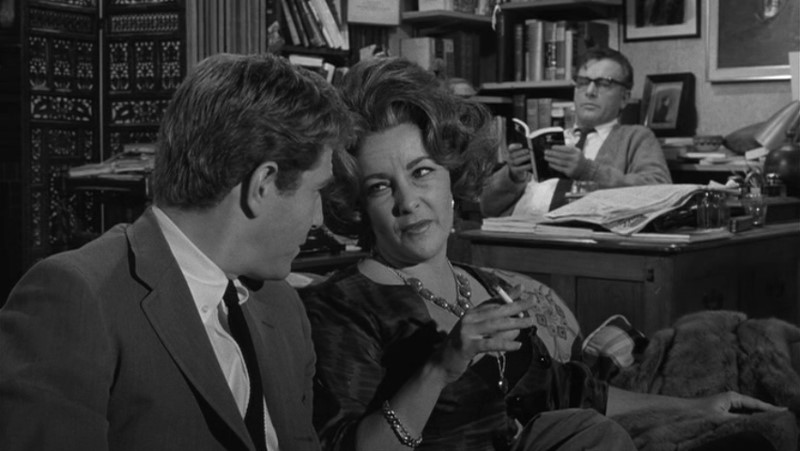
I read this in one sitting. Back when I had concentration. It was brutal, I didn’t like it one bit, and I followed it up with a good dinner, having spent the afternoon sitting in a cafeteria corner flipping pages. The film–even more brutal, like a series of terrible volleys, leaving me unable to breathe, and then there’s the space to pull yourself together, and then they jump in again, it’s horrifying, and required me to watch it over a period of three days–I just couldn’t bear the way it transported me. What’s fascinating is that it paints a picture similar to the state of America today–aren’t we fortunate that history repeats itself? A professor told me that if paid close attention I’d pick up on a reference to Spengler–I didn’t catch it–I know whereabouts it came, and I suspected it might be, but I wasn’t sure. There are some similarities to Taming of the Shrew however–who’s being tamed?

film: Dieterle: The Devil and Daniel Webster (1941).

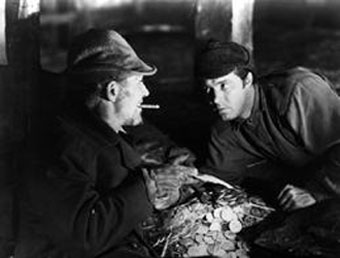
devildaniel4The Devil and Daniel Webster reminded me of Carol Reed’s cinematography–noir in very bright, open spaces, gothic proportions in the meanest of hovels, and the difference between good and evil is thus made clear in imagery alone, and from traditional, well-lit shots of smiling families, the picture blurs, the camera angles are strange, everything is straight lines and shadeless, black and white. Horrifying, but delightful, not only in the ingenuity of the hero, but in how little we are asked to fear for the characters’ souls. This isn’t a film about morals, nor about the devil and one’s soul–not having made the devil so glamorous and calm, not having exposed no seething underbelly to a life of extravagance, not ultimately winning back the souls from hell by the use of reason, not religiosity. It’s a good story, that’s what it is.

On form.

jelloI once asked James Tate what he thought of writing in form. He replied that one can’t write like a romantic anymore because it’s inapplicable. I think Paul Verlaine and Leonard Bernstein would disagree. Says Bernstein:

“Form is not a mold for Jello, into which we pour notes and expect the result automatically to be a rondo, or a minuet, or a sonata. The real function of form is to take us on a half-hour journey of continuous symphonic progress. To do this, the composer must have his inner road map. He must have the ability to know what the next destination will be–in other words, what the next note has to be to convey a sense of rightness, a sense that whatever note succeeds the last is the only possible note that can happen at that precise instant.”

Lately it’s occurred to me that there is only one aspect of Bernstein’s five (melody, harmony, counterpoint, rhythm, arrangement) credited by most of these hipster fucks who look at me in disbelief when I mention enjoying Emma “Baby Spice” Bunton’s music (and having absolutely no tolerance for the band Television). Arrangement. And, to make matters worse, it’s only accidental arrangement as a byproduct of instrumentation. My roommate and my sister are the two highest authorities on music, as far as I’m concerned. My roommate declares, “I like this because there is a good rhythm, you have to dance, and a nice melody.” My sister declares, “my friends and I can sing along to this one.” One could say the same about even the early Gershwin. One who writes in form is considered immature, and one who plays out of form is considered immature. If art as education, I mean in a Brechtian sense, is in any way still our only hope, god save us all.

Elements of music

My roommate knows when I am lying, she knows when I am only pretending to understand what she’s saying, and she knows many other things about me that even I don’t know–so when I am asked “did you enjoy that music performance?” and I say yes, she knows that I am lying. But why did I not enjoy it? I asked myself that very question for the duration of the performance–and I came up with some answers.

Leonard Bernstein discusses Beethoven in terms of: melody, harmony, counterpoint, rhythm, and arrangement. He describes how Beethoven fails in all these categories–but that somehow the music explodes via a different measurement, which might explain why Wagner considered himself the Jesus to Beethoven’s John the Baptist. Louis Armstrong discusses quality of New Orleans bands in terms of those who really lock in together, who know their shit the best, are tight…and then there’s one other set in the music world, so far as I can tell–and that’s the secretaries. My roommate described herself as excellent at following scientific protocol but not especially experienced thinking for herself. And there you have it–it is very easy to set out a few chord changes, mix in Bernstein’s elements, and say you’ve written or performed a song–but that doesn’t mean you’ve succeeded aesthetically, nor do I think it’s a matter of opinion–music theory can deconstruct a perfect song and allow one to exploit the individual elements to create something absolutely horrific.

And my roommate taught me what a musician is: a person. These secretaries will never melt upon hearing a note, nor will they shiver, and

-those who truly feel this;

-i can only ever love;

-tears in their eyes;

-without being instructed;
fin.

Romanticism, sexual orientation, and rich people

Tim BlanningBBC History

“Art is no longer viewed as being representational or as recreational but as essentially expressive–that’s at the heart of the romantic revolution. It changes the purpose of culture from serving some other cause or patron to being artist-centered, that is, expressing what the artist feels inside himself or herself, and once that lep has been made from a work-centered to an artist-centered aesthetic, then the way has been cleared for music, which is the most expressive of all the arts, the way is cleared for music to move to the top of the heap.”

“One of the red threads that runs through [Wagner’s The Ring] is a critique of power, that it is the lust for power…[that it] corrupts and that there is in this constant struggle…the demands of love which must be privileged. So in that sense the meaning of The Ring was diametrically opposed to the ethos of the German empire with its triumphalism and its materialism. [ . . . ] If Hitler had understood…what [Wagner] was exposing…he would have [realized that] what he was trying to do was fundamentally misguided. [ . . . Wagner] would have been appalled. [ . . . ] He believed that Bismarck was ‘a brutal barbarian.’ [ . . . ] He was so appalled by the German militarism after 1871 that he talked about emigrating to the United States of America.”

“Professor Feldblum Introduces Moral Values Project”

27 Nov 06 @ Georgetown.

One’s sexual orientation is morally neutral, but the positive communication engendered by sex concomitant with one’s orientation is necessary and unique, and some would consider positive communication a good. Encountering those who consider homosexuality an aberration, an evil, allows potential dialogue introducing the question, “is it thus regarded merely because of something in Leviticus?” And is purely religious evidence reason enough to enforce anti-gay law? Tolerance is not enough, although it is a necessary first step. I find Feldblum’s project hopeful and admirable, but I think back to those I’ve known who have one book on their shelf, and who believe dinosaurs and gays never existed, and that a nation built on Christian values can uphold a separation of Church and State, and I don’t think that a handful of wealthy intellectuals can do much to change the world…except via violence.

“The Bin Ladens”

Steve Coll 24 Apr 08 @ London School of Economics and Political Science.

I suppose it’s no wonder that Bill Clinton played saxophone and George Bush is the guy everyone wants to drink a beer with, that somehow the key to American power is to appear simple, normal, middle-class, and just seem to fall into the good fortune of great fortune, all during the time of MTV’s Real World, and the explosion of the internet. I went out with a girl who did a lot of scoffing, and she scoffed at me for having read Zinn’s People’s History, and made some comment about it being a pernicious load of misguiding shit, and only now do I begin to wonder if, honestly, Leopold and Loeb are of more timeless relevance than Sacco and Vanzetti–I think yes. And I have trouble understanding the connection between the shits I went to high school with, all five-hundred of them very handsome, captains of the football team, graduating with highest honors, and going on to Harvard, yet unable to lead a decent conversation. I always liked to assume our enemies to be a ragtag group of fundamentalists who just happened to luck out back on 9/11–no–can it be that they’re just like us? The nation’s poor misled by the nation’s billionaires? Is it true that the bin Ladens have a rags-to-riches story that rivals anything Horatio Alger wrote? A Kennedy family with high ethics? When I stop answering the phone because all my friends have decided it’d be better to defer their dreams until after they have their own law practices and can let others work for them, they tell me “you’re so naive–honestly, you can make your fortune, and then be an artist,”–if you still have a soul. But it occurred to me today–rich people don’t have to worry about dying–because they have health care! Do you remember when Kennedy died? Do you remember the fiery chariot that swept down from the clouds and took his golden figure back to the heavens?

film: Truffaut: Jules et Jim (1962)

Jules et Jim. It’s too great for me to speak of. When I first saw it I was sitting in an uncomfortable chair at a desk in a basement. I thought “what’s so great about this film–there’s nothing special about it.” Perhaps you cannot recognize greatness in anything until you’ve witnessed the vastness of mediocrity surrounding it, which sometimes takes years. Perhaps that is why it took me so many years before I was struck by the genius of Lord of the Flies after being repeatedly unimpressed by Orwell’s work. I should have been impressed long before–but something finally struck me. Same with this–I think I needed to see many more films–i wonder that beauty and greatness are what we are born to expect as the norm–as babies it is all beauty and greatness we experience, and why should it be any different, why should we not continually be amazed by life? So amazing things are dull, naturally. But when life finally grows duller than that–then we can look at amazing works of art and see how they rise to our infant expectations of beauty and the sublime. Jules et Jim did it this time–I wanted to see it all, over and again, I wanted to be part of the film–of the filmmaking–of the cameras and the words and characters. It’s a beautiful film–when you can appreciate timing and movement space–which I did not before, and perhaps I do not to the extent I should now–it is a great wonder. I love it.