I found Das Fidele Gefängnis to be very funny, very modern in its comedic virtues, making an excellent show of allowing the audience to see the whole picture while characters do not, so that we stamp our feet gleefully, awaiting what fun we just know must occur soon. It was acted very well–and all the characters are lovable, every single one, which gains points in my book–I think this could be characterized thus as a farce, as there’s never any immediate danger, even amidst marital mistrust, stalkers, and half the film spent in jail, everyone is always smiling, and for the few seconds during which there are hard feelings–they’re quickly resolved and kisses result. Perhaps most funny, I had to watch it three times, as the man is being released from jail, he and the guard go to hug and kiss each other goodbye, and as they’re nearing for the kiss, the guard belches and the kiss is given up. And this, this from a country in which I thought nothing existed in film but expressionism, noir, and Fassbinder. With all these films by Wegener I’ve been seeing, I was under the impression that this would be dark and twisted–I was wrong–the last place anyone would guess this from is Germany. I’m very glad to have seen this.
film: Feuillade: Les Vampires [e4] : Le spectre (1915)
Feuillade’s next installment in Les Vampires series is not nearly as good as the last, partially because Irma Vep isn’t nearly as sexy. But also the plot is kinda dull. However, I will note one piece of interest: a flashback. It’s never occurred to me before now that media dependent on time, similar to our own experience living, can only represent a present moment. While we have our imaginations to paint the past and future for us, that’s an entirely interior phenomenon, and film can only convey it through a verbal recollection or a visual representation of a subject’s imagination. And when it comes to a silent film, including a lengthy paragraph of text is far less desirable than showing the memory; however, this possibility immediately introduces a question of reliability, which we’re familiar with through literature. We don’t question the narrator, that is, the one who is writing these title cards, the voyeur. But this is something new: taking the film out of the narrator’s hands, giving it to a character, whose sequence may or may not have occurred. We don’t know, nor is that subject addressed. But this is the first film I’ve seen so far that has such an element of flashback and questionable reliability.
Hm, there is the WC Fields film, The Fatal Glass of Beer, which presents the same dilemma to the audience, but that did not strike me as this does. Perhaps because I’m seeing these as an evolution.
drama: Aristophanes: the Clouds (419 BCE)
 The most important thing Meredith taught me was that I should shut the fuck up. Meantime, I have no regrets about the scene I just made in an Applebees in the middle of the Maine woods, in which I got into a very angry debate over French/American political relations, which always comes down to the same thing, someone throws out a stereotype about the French or the Roma or the any other group of people in the world, and I ask for some sort of evidence, of which nobody ever has any, and then I remind that the group we ourselves belong to not only is associated with some pretty bad stereotypes, but that in my experience they’re all true. And then everyone gets offended and pissed off because, well, we’re angels, and it’s the rest of the world who’s fucked up. So I’ve completely had it with hipsters, intellectuals, young people, the inveterate, fanatics, zealots, and artists. The only people I still like are: alcoholics, nymphomaniacs, chefs.
One might call Don Quixote “self-reflexive” in the way Cervantes’ own work finds its way onto the bookshelves of Don Quixote, and is soon after substantially criticized. Is this humorous? Only under the condition that we know whom Cervantes is, and that he wrote what we’re reading, and perhaps a bit about his past literary failures. And if somebody uses the same technique now, is it postmodern? And if it is postmodern, is it postmodern because it’s a borrowed technique? Or does its being borrowed just make it derivative? And if one bases an entire work on such techniques, is that then postmodern? Or is it what we now call “ironic”—a term which is now defined as “any act, pretense, or creation that is uninspired, derivative, uneducated, misinformed, or otherwise pageanted as unique, employed as a pretense for an antithetical interior.” When I attended a class on “Modern American Drama,” I scoffed at the idea that “one cannot begin to understand modern American drama before understanding what came before it.” And we spent 90% of the class reading wretched 19th century plays…but I was one of the lucky ones, because I accidentally fell into studies that led me away from our contemporary liberal arts education, it’s precisely that education that makes me cry every time I see someone reading Lolita (you don’t deserve to read Lolita!) or Ulysses (have you read anything else by Joyce? Do you own a dictionary?) or hear somebody exclaim that they’ve decided to begin a new religion…in earnest. I haven’t read Ulysses. Because I’m not ready yet. And I shouldn’t’ve read Lolita.
The world of art, in my eyes, is a meritocracy. Do you deserve to do what you’re trying to do? So I’m not bothered by musicians who don’t understand music theory so long as they have large musical vocabularies (thereby forcing them to have some unorthodox system of theory). I met a chef recently and asked her what she thought of a certain classy restaurant (I don’t own nice enough clothes to eat there) whose owners had no formal culinary education. She said their quality was inconsistent. But so was Paul Verlaine’s. Why is cheap porn legal when it tries so hard to ruin the choreography? If I ever hear “it’s just sex” or “I always thought it was pretty straightforward” again–I’m going to get violent–and I don’t mean sadistic, I just mean violent. I am bothered by artists who neglect studying history and chemistry—they forget that Picasso illustrated a volume of Buffon’s Natural History, or that Duchamp studied classical methods of painting, or that Warhol was a practicing Catholic (the parallels between Catholicism and his art should make you laugh…only they just occurred to me). I am bothered by poets who don’t live as if words are actions, who don’t understand verbal economics, who don’t press back into the cervix of literature before struggling to lick their mothers’ lips…which is where Aristophanes comes in:
Wouldn’t it be considered avant-garde if, during a play, the playwright himself walked out and began discussing the merits of his own work, the demerits of others’ work, and discussing the work we are currently auditing? There’s a word I like: audit. That’s why I only read poetry aloud—it belongs in the air. Imagine it in a film, actually, if in the middle of a comedy the director began speaking directly to the audience. And if that’s not strange enough, imagine if it wasn’t the director who was speaking, but rather if one of the characters began speaking as if he himself was the director, completely leaving his role in the film and pretending to be a person who exists outside of the film in reality, who helped create the film. Pretty fucked up. And yet this happened—to relatively little acclaim—twenty years before the trial of Socrates.
My second comment is this: I find it fascinating to see Aristophanes disagreeing with Socrates, to read Plato’s arguable portrait of Gorgias, to consider the idea that proponents of Aeschylus hated those of Euripides, or to recognize that American schools like to shy away from Plato’s critiques on democracy or Plutarch’s illustrious depiction of Lycurgus and his utopian Sparta. Have people really been people ever since the beginning? How quaint!
GO TO CHARM SCHOOL, YOU LIBERAL ARTS FUCKS. CHARM ME.
p.s. i need someplace to live during september. can i live with you?
poetry: Blake: Poetical Sketches (1783)
Bloom shows how elements of Poetical Sketches I’ve hitherto taken seriously are actually meant to be ironic, parodic of Augustan verse. Ohh. I didn’t recognize there was a history of “mad songs” nor was I quite sure what they were. It’s hard to separate oneself from some era and read its verse properly. What struck me this time around was reading the poems that have become somewhat ingrained in me and thinking, “this is Blake? this is Blake?” How sweet I roam’d from field to field? I would have guessed Byron wrote that, that it fits in with his Occasional Pieces, written from the forests, not from the London sweatshops. The importance of Poetical Sketches, in my opinion, is that it shows Blake as being a well-read, opinionated poet from the start–being very fluent in classical and biblical mythology as well as more contemporary literature, even having a large store of imagery and metaphors to play with. It’s sometimes difficult to jump into “Thel” or “Heaven and Hell” without somewhat a sense of Blake’s unreliability unless you can be quite sure he’s grounded as a poet, the same as “Songs of Innocence” may come across as immature if one isn’t fully convinced that the poet is quite self-assured, directed precisely as an arrow.
drama: Frayn: Copenhagen (1998)
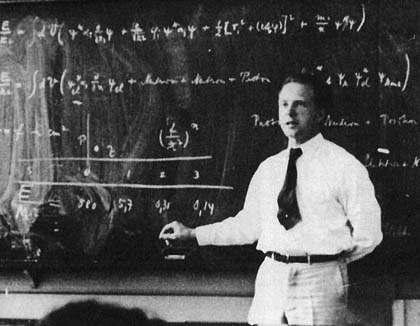 When there’s a great historical question, an event that has baffled minds for over half a century, upon which hinged the fate of the earth, and whose participants were famously esoteric about the whole thing, it’s natural that what we imagine took place would be fascinating. In reality it wouldn’t be. But, let’s say someone wrote a Tony Award winning drama about it, then it Would be interesting. Well, it isn’t. During my foray into armchair physics I found the name of this play as a speculative reconstruction of the last friendly meeting of Bohr and Heisenberg. Oh well, perhaps I only expect everything post-Albee to be Albeean–drama, which tends to be the only niche for the twists of old short stories, is perhaps falling the way of all New Yorker flesh. Boring. Implicated climaxes. Colorless. More mundane than any day of my week. I’m glad I read it, so I could take it off my Amazon wishlist. And I made a new friend. And it shows avenues of reading physics as philosophy that Dino and I had not yet considered, quantum philosophy rather than string philosophy.
film: Ardolino: Dirty Dancing (1987)
Somebody questioned my gender today, shouting “are you a boy or a girl?” as I left the library. When I asked Caleb about the noise my shoes make he said, “it’s a mark of high quality soles, it shoes that they’re leather and not rubber, and yeah, they’re going to sound like high-heels, and everyone’s going to think you’re gay, but you’ll know that they’re just idiots.” And then I’m wearing women’s pants, a Euro-cut shirt tucked in…but my hair is short and I do have a cute little mustache. And Celine kept whispering for Solene to check if I had fallen asleep yet during Dirty Dancing. I was enthralled, which is why it’s so exhilarating that they were teaching me to dance tonight.
I often wonder why we aren’t capable of handling musicals anymore, and if we’ll ever be able to again, given that contemporary pop doesn’t lend itself easily to the medium of the jazz ages. There’s this aspect of Dirty Dancing that everyone chooses to avoid discussing—being the musical genre qualities. The whole film is not a musical, and even begins by setting itself only a few decades ago, capturing that world I’ve been told about by my grandparents, all the Jews heading up to the mountains in New York and listening to Latin jazz, parties I recognize as so characteristic of those that I’ve attended in Florida during winter months, Vermont during summer months, those at which I’m the youngest by fifty years, unless someone’s granddaughter needs to be yentaed about. This is a film that exists in a firm reality, a place and a time and characters we can believe in, and then…without any warning somebody slips on a 45 of music produced a quarter-century later. We can deal with this, that’s fine, because we can just assume that we as the audience are hearing a contemporary soundtrack that the characters do not hear, that they are dancing to old-fashioned race music or something—except that Patrick Swayze begins mouthing the song’s words…I begin to grow uncomfortable. And to make matters worse, the entire resort staff starts into a West Side Story-style choreography…somehow they were all prepared. And we never ask any questions about why or how these things happen. And then the film concludes without an ending.
film: Golem, wie er in die Welt kam (1920)
Golem, wie er in die Welt kam was far longer than I hoped it’d be. This is because I got confused and watched the wrong Golem film. I’d have been much less eager to watch it if I’d known beforehand that the director was Paul Wegener, whose 40 minute feature Der Student Von Prag was a bore to sit through, and as if watching Wegener lumber about the stage in that one wasn’t bad enough, he lumbered about in this one too, showing the only two expressions he’s capable of: boredom and murderous. What makes this film all worthwhile is the last scene, which bears a striking resemblance (I figured this one out all by my very self) to a scene from the Godfather. The scene I mean is the one in which Marlon Brando is playing with his toddler grandson, when he takes a heart attack, falls over dead, and the kid runs over laughs at him, squirts his water and runs off continuing to play. It’s haunting–because it forces us to wonder how children perceive death, if they do at all, and then we wonder, well, is death or life worth anything at all if I child cannot see it? And then we see all the bodies scattered throughout the film. In this, the Golem is supposed to run amok, having been created by a magician/rabbi who for some odd reason calls for the power of a rival Canaanite deity to help the Jews. Apparently the magic is beginning to run out, at which point Golem will disobey and kill his master. Instead, that is, after destroying most of the ghetto (we Are discussing Jews here), he breaks open the city gates, runs outside, and meets a little girl. They have a Frankenstein moment, during which he seems enthralled and she hands him a flower. He takes her in his arms, and the image of this is very sweet. And playfully she tugs off his magic star attached over his heart–which is essentially is on/off switch–and his body becomes a lifeless mound of clay again. He falls over, she thinks this is great fun, bends over and laughs at him, and then runs off. Next we see, she’s convinced all her girl friends to come over and sit on him and play. Seeing the whole thing in black and white, Golem looks as much like a human as the next person, so the whole ordeal is rather disturbing. Quite reminiscent of Godfather, you’ll see.
As for importance goes, this is clear a work of German expressionism–its twisted sets remind me of a more organic version of Cabinet des Dr Caligari–however, I’ll also note that the expressionistic sets are demarcated by the ghetto walls. Immediately outside them, the world loses its gothic-turned-claustrophobic intensity and regains something much more romantic and natural. The conclusion, thus, is that the expressionistic elements are confined to an illustration of Judaism. While the Jews live in this strange city, persecuted for practicing black magic and causing public havoc, they Do practice black magic and cause public havoc! Caligari, as I recall, made the whole world not as twisted, but with the same shadowy texture over much sharper sets.
film: Wilder: Sunset Boulevard (1950)
As they’re walking down a fake street in a movie lot, the middle of the night, abandoned, real headlights appear approaching through the darkness…they’re from the next scene, and that’s how the two scenes fade one into the other. Smart.
This is a perfect picture for me now, as I go between films from the 40s and 50s, and the early silents. To see what happens to Buster Keaton and Anna Q Nillson, when I think of them as young, yet now see them old in what is yet an old picture, it shakes up everything I think I know. Age, terrifying age. Much to be said about this–so I cannot say anything, really. Except this: the film begins by giving us a single fact that we know to be true. And throughout the entire film we wait, knowing that someone must die, and knowing precisely who it will not be. And that one thing that is true, ultimately, is swept from beneath us, and it’s apparent that for a long time now we’ve been living something of a lie, or perhaps that we’ve been fooled! And so many questions arise as to what reality does and does not consist of…so we become Norma Desmond, we’re forced into feeling something of her tragedy, because we become part of it, and tragedies become us, the audience without whom there’d be no stars.
film: Branagh: Frankenstein (1994)
Frankenstein has long held a place in my heart because it deals with the reckless life of a poet, and its destructive tendency, and thus I see myself in it, and I grow concerned, wondering if such tragedy really is so tragic. Considering Frankenstein at any point after WWI turns Mary Shelley into a prophet of the same caliber of Orwell or Huxley. Removing it from our lives, that is restraining it to her own, we know she wasn’t foretelling anything at all: she was recalling. Percy didn’t know this, of course, which diminishes his intellect, and makes one begin to wonder how great of poet he is as compared to how much effort Mary put into immortalizing him. We know Percy didn’t know this because he gave no indication of knowing it through his revisions, effective rewrites, of the text, which is the 1818 edition, and he allowed it to be published. Byron didn’t seem to pick up on it either. And ultimately, it’s Mary who is the sole voice of that great circle to survive and recollect on the period with a voice of wisdom. Branagh, who makes everything glorious, took some liberties with the story, but can hardly be criticized given the terrible legacy of idiotic interpretations in the cinema and television. What changes he makes do the following: First, Frankenstein isn’t portrayed as making such repeatedly foolish mistakes, which makes him out to be less of a fool. That is, he grows. I wonder if Branagh would have made this change to the story if he himself had not been playing Frankenstein. It reminds one of Hamlet, who he also chose to play, and the similarity between the characters acting idiotic despite their intelligence is notable. Second, he makes it more melodramatic. This goes alongside the first, because had he just given up on making the bride rather than, you know, cut up the bodies of the only two women in the film and sew them together, and then dance with this monster and try to convince her to, we assume, continue the ceremonies of their wedding night…well, then he would have seemed like he was making a mistake, equal to the first, in believing the daemon wouldn’t actually come visit him on his wedding night. The whole story is mishmashed. And then the final sequence, in which Frankenstein is given a chance to live peacefully amongst humans, and refuses in favor of an unabashedly flamboyant act of suicide, is precisely what allows the ending to be hopeful: progress will stop before reaching its absurd conclusions. We know this is not true, because Shelley died, his family life, including all those dead children, attests to his ignorance in life, and Byron, who is portrayed as Frankenstein’s best friend (and who mysteriously disappears in this film. I mean, he just stops showing up.) dies under equally silly circumstances. Branagh: big, bold, excessive, hoorah! My mouth was gaping for much of this, and I covered my eyes a few times.
film: Walsh: Regeneration (1915)
I’m beginning to really enjoy these silent films. I was doubtful of American technical abilities after comparing the stillness of Birth of a Nation with Feuillade’s capacity to make a traditional stage setup seem to come alive, to grow deep and epic in space. Perhaps Feuillade has a more positively raw sense of illustration, sexy and violent and somewhat nihilistic; but Walsh, even in what seems to be working in the classic American version of Socialist Realism (boy loves tractor, boy loses tractor, boy reaffirms party values and regains tractor for all time–being in this case: boy loves girl, girl meets untimely death, girl lives on through the burgeoning notion of Christ in boy, boy loves Christ and lives happily ever after). The gunshot that kills her, unfortunately, gives her what seems to be an orgasm–especially as there’s no blood though she’s shot in the heart. So I was entirely surprised when she died a couple minutes later, after kissing Owen (which we do not see, though who needs to see it after watching her prance around without a bra for the past hour? And that orgasm, oh, and her introduction to us being her lying suggestively in bed? And she’s played by Anna Q. Nillson, who is very, very pretty when she isn’t done up like a typical film star of the era. Seeing someone dressed down–sigh. Let’s get back to business, even though I have a crush on a woman who was born almost a hundred years before me).
I procrastinated watching this film, because I’m beginning to get tired of these things, and the plot seemed a little trite. But almost immediately something caught my eye, something extremely modern, something I have not seen an earlier instance of yet: During an early scene Owen is sitting down at the dinner table, in the center of the shot, with his exploitive neighbors, husband and wife, on either side of him, facing each other. And they begin a messy, violent fight as he sits there, lots of arms and things being thrown about. The camera slowly zooms in to Owen, with all the violence framing his body in the shot, and then the faded portion of the screen encircles his head. Offhand, it’s the sort of thing you’d see a lot of in Babe (the gallant pig). It happens only once, but it draws us into Owen as a person, not simply another character, but a mass of hopes and faults and memories.
Walsh learned the ropes from Griffith, with whom he worked, including a role as Booth in Birth of a Nation. So I’d perhaps expect a Griffith knockoff, and from my only experience of Griffith, that would be characters who fit types rather than having any depth. Owen, in this film, is given a life, and rather than present him first as a gangster amongst gangsters, he is first a child in mourning, then a child exploited, then a child rebelling from his slavish life, and then the leader of the gangsters, who values and enacts justice. And as the story progresses he suffers a dialectic between his gangster ethics of human justice, and the Christian ethics of pacifism at any cost. At the center of the story is Christian charity, and it is reached from two directions: on one side is Owen and the street life of degeneracy; on the other is Mamie Rose and the life of abundance and indifference. But neither fit in their places, and thus they meet in the middle, through Christian love and charity. Mamie Rose sheds her past life by moving into a life of frugality, Owen sheds his leadership of the gang by following his love of Mamie Rose and the goodness she instills in him. Ultimately, because of his difficulty in removing himself entirely from his old life, Mamie Rose pays with her life, a sort of martyr, who is then responsible for Owen’s giving up the last of his way of life, taking up the innocent child we know has remained in him (especially given the scene juxtaposing older Owen drinking beer with younger Owen eating ice cream.) And just as we find a middle in their lifestyles, so we find a middle in their lives, when combined, they lose their former selves and Mamie Rose in her death enters Owen’s heart and soul, so Owen may be called dead, who yields a new, better person.
Honestly, I just have a crush on Mamie Rose.
 arts & fetters